

Top FM AdFocus Award to honour best client-agency partnership
The Partnership of the Year Award will celebrate a marketer and agency team that has risen to the challenges while maintaining a robust relationship
With the current economic climate and lingering effects of the Covid-19 pandemic, the relationship between marketers and agencies in creating effective brand marketing has never been more crucial.
“In the past 18 months, we’ve seen a stronger relationship developing between marketers and their agencies, driven largely by the turbulent economy and budgetary constraints, compounded by limited resources and the increasing use — and confusion around — martech [marketing technology],” says Johanna McDowell, CEO of the Independent Agency Search & Selection Company (IAS) and Scopen partner.
The digital revolution has led to a fragmenting of spend, creating a need to collaborate in combating potential pitfalls in the consumer market,” says McDowell.
“The sheer volume of work required for a brand to stay ahead of the pack is not something a marketer can do alone. They risk not being seen, and determining which channels should be used is best done when marketers and agencies work together on each campaign.”
As client-agency partnerships become closer, winning the IAS-sponsored Partnership of the Year Award at the annual FM AdFocus Awards — which celebrate agencies and individuals for their creativity, marketing skills and business acumen — has gained even greater meaning.
Combating uncertainties through robust partnerships
McDowell says too much is happening in an atmosphere of uncertainty for marketers and agencies to do anything but hunker down together and create best-fit solutions.
“Rampant inflation and other global challenges, along with the distinctly South African issue of load-shedding, means stronger marketer-agency teamwork is the only way to mitigate potential issues.”
Those who have found a way to partner in combating difficulties are able to deal with the turbulence together, McDowell says.
So, how can agencies and marketers make sure they’re armed against all eventualities?
“They can continue to forge their partnership by being flexible and willing to bend rather than break as they navigate their way through everything from budgets and technology to understanding and agreement on platform choices,” she says.
“It is because circumstances during and after the pandemic have brought so much change that the Partnership of the Year Award has taken on a whole new meaning for our industries, and we’re looking forward to well-deserved accolades being delivered.”
Testament to the ever-increasing importance of this award among clients and agencies is the record number of entries in this particular category at the AdFocus Awards this year. The secret to great partnerships in an uncertain era, “is to be in lockstep across all decisions. It’s what the judges will be looking for from entries in the FM AdFocus Awards 2023 Partnership of the Year Award”.
The winners of the 2023 AdFocus Awards will be announced on November 22 2023. For more information on the awards, visit www.adfocus.co.za
Read this online here
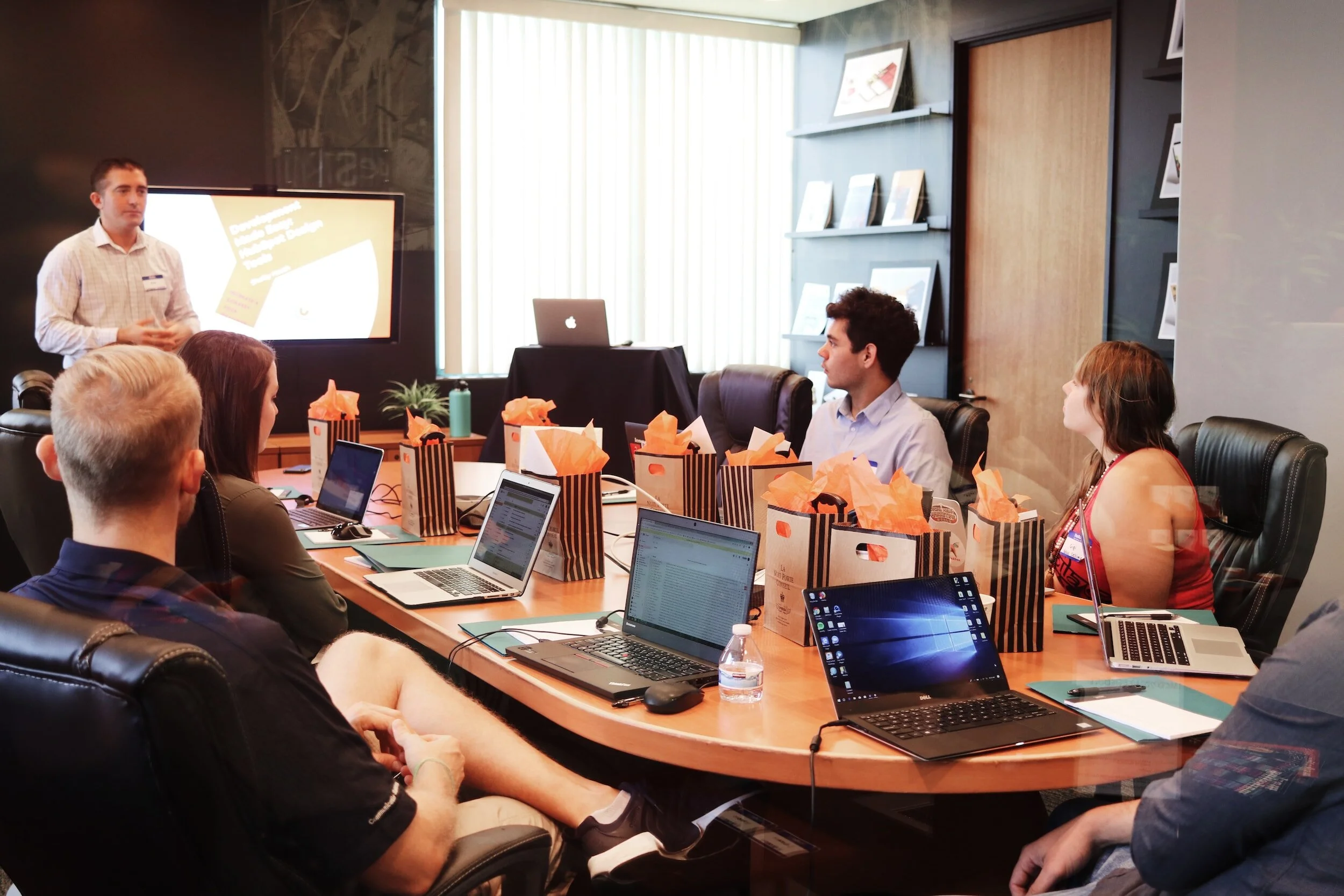
Don't get caught out at pitching time
Where many organisations start slowing down in the fourth quarter, the period between September and December is often one of our industry’s busiest, writes Johanna McDowell, CEO of the Independent Agency Search & Selection Company (IAS) and SCOPEN partner.
It’s the season for new business pitches, and marketers are glancing ahead to 2024 for a number of reasons. Firstly, they’re evaluating whether the agencies they have in place are the right ones for what may come. Next, any contracts coming to an end will need to be dealt with before the new year takes hold and this means looking at new agencies or reviewing their current ones for suitability.
Thirdly, marketing executives will be noting the many changes taking place in the market, both on their side and that of the agencies, and formulating solutions regarding the options open to them in terms of resources and budgeting.
Then, some marketers are keen to get a head-start on 2024, with new agencies and new work before the end of 2023, making the time between now through to the end of February officially pitching season, with all its attendant demands.
Add to these pressures the fact that 70% of corporate South Africa starts its new financial year at the end of March, and marketers know there are deadlines and governance requirements to be met - and those ready to run when the starter’s pistol sounds will be in the best position to head the race.
The season of the big spend
Impacting on this vital activity is that this is traditionally an extremely busy time, ahead of the holidays, followed by back to school campaigns directly thereafter. The December break, where many South Africans get their chance for downtime, requires extra consideration around timing.
Historically, this is the season where we see a lot of spend happening, particularly in the retail sector and the launching of new brands in time for festivities. So, on top of time spent on the pitching field, marketers and agencies still have their day jobs to contend with. It’s an intense time – exciting too, but often fierce. It’s a period of reviewing the work onboard, while not wanting to turn down new opportunities.
My message to marketers now must be to get your juggling gloves on and make a start on all of the above, because if you want to start with new agencies or re-brief current ones, there are some 14 weeks to year end.
To run a proper new appointment process takes eight to 10 weeks, and there’s much to be done, so marketers need to call in their troops and get as much assistance as possible to make the catch within the timeframe and finish the hard yards before January to alleviate pressures as 2024 begins.
By making sure you have a team that includes an intermediary, you have expert assistance that can take some of the load off during this tight timeline, allowing you to dive in now and get that head start. Handing over the management of the pitch process enables marketers to turn up just three times – to note credentials, the chemistry session and the final pitch, essentially removing their greatest pain point.
With the managing of post-pitch contracting and the hand-over between agencies taken care of, time-poor marketers can focus on hitting the ground running with their new agency in place and campaigns can be briefed in and started almost immediately.
Even as we watch the clock ticking towards 2024, there’s little reason why marketers should drop the ball at this stage. By ensuring they’re surrounded by an agile and experienced team, 14 weeks well-used can put a marketer ahead of the pack – not only to score that try, but to convert it to early success.
Read this online here

Further strength behind IAS Media Assurance Auditing offering as ECI Media Management incorporates Eley Consulting into its business
Independent global media consultants ECI Media Management announces that it is incorporating British firm Eley Consulting into its European business.
Established in 2015 by Mike Eley and Richard Edwards, Eley Consulting supports leading advertisers with market intelligence and expertise in strategic and digital planning, intermediary services, media accountability and financial transparency. Eley Consulting entered into a partnership with The Independent Agency Search and Selection (IAS) late 2022, offering Media Assurance Auditing in South Africa and Africa.
The deal will see Eley Consulting’s talent and client portfolio of UK, European and African advertisers consolidated into ECI Media Management, boosting the company’s presence and capabilities in these regions. Richard Edwards will join the UK team in a senior client management and new business capacity, while Mike Eley will take on an advisory role.
ECI Media Management is one of the world’s largest media performance consultants with a global footprint across the Americas, Europe and Asia Pacific, now also extending into Africa through its partnership with the IAS. It offers data-driven media intelligence and rigorous benchmarking to a portfolio of blue-chip global advertisers, helping them to ensure their advertising investment and agency relationships drive higher media value for their brands.
Johanna McDowell, Founder and CEO of the IAS, says “This new development adds further strength to the existing Media Assurance Auditing service that IAS offers to local clients. Backed by ECI Media Management’s experience, team and track record, IAS is set to deliver enormous benefit to marketers, agencies and media houses, enabling the transparency in cost and compliance industry-wide that is vital to the trust that long-term relationships between all parties require”.
Richard Edwards added: “We are pleased to be bringing our business into ECI Media Management – our companies are a natural fit as our values and approach align. The integration of our businesses will create a powerful team that will enable ECI Media Management to continue its growth trajectory across Europe and into Africa. We will continue to work closely with our Africa partner, the IAS, and will bring additional opportunities for the African markets which up till now have not utilised Media Audits to their full benefit.”
The deal is effective immediately.
You may also be interested in Media auditing and assurance: Would you buy a car off its spec sheet? — The IAS (agencyselection.co.za)

Agency Scope SA 2023/2024: A very good response
With Agency Scope SA 2023/2024 fieldwork well into its third month, close to 200 interviews have been completed among marketers responsible for more than 150 brands. This is according to Johanna McDowell, Scopen partner and CEO of the Independent Agency Search & Selection Company (IAS).
“Our research team is well on the way to achieving our target of 200 brands and 300 interviews by the end of the fieldwork for the Agency Scope biennial study, which delves deep into what marketers really think and will provide important analysis for industry leaders and senior personnel,” she says.
“The response has been very good, even while marketers are under more time pressure than ever - certainly more than they were two years ago. With just a month to go, we’re thankful that marketers have been willing to give their time to this pivotal industry research.”
Snapshot of early insights
Some of the early insights offer a compelling view of what the final results may show, McDowell notes, as interviews progress steadily toward presenting the final results in November 2023.
“Greater respect for Scopen and a far more positive response is apparent across the board this year,” she asserts, citing the example of a “hard to get” respondent participating because her colleagues told her what an intriguing and thought-provoking interview it was.
“This bodes well for the research overall, as the growth in diversity of respondents is of huge value to the whole industry,” McDowell says.
Artificial Intelligence (AI) and tech
“Snippets include those we’ve seen on the topic of Artificial Intelligence (AI), which indicate that it is highly topical, but very polarising – people either fear it or are extremely excited by it.”
Also noted is the market’s focus on staying up to date with tech and digital evolution, the takeout being that some brands are very advanced while others are overwhelmed and struggling to keep up.
“Also, creative speed to market has been mentioned a lot; and in terms of digital platforms, marketers want quick creative concepts and are not prepared to endure traditional media lead times,” says McDowell.
“On budget issues, researchers are observing cuts, even while marketers are still expected to deliver targets. With less money and less marketing, it seems this is going to be an area of huge interest to the industry as a whole.”
Online survey
Apart from researchers hour long and in-depth, face-to-face interviews with marketers, Scopen sent out an online survey to around 500 senior members of creative and media agencies early in August.
“This is designed to get their insights on what is happening in their industries. It provides vital information that will complement the Agency Scope study in terms of furnishing data from the other side of the coin,” McDowell says, adding that the online survey takes anywhere from 20 to 40 minutes; and the response has been robust, with agencies noting their appreciation of being included.
“Both marketers and agencies understand the importance of giving feedback to the knowledge base we are creating, and which will add immense value to the overall Agency Scope study. We’re anticipating lots of new data to analyse through September and October, and we’re looking forward to our full presentations from 30 October onwards.”
With so many profound and rapid changes between the last study and this, Agency Scope is excited to see how the changes and challenges are being experienced, and the solutions marketers are implementing to meet shifting dynamics.
“A full schedule of meetings is planned throughout November, where we will be presenting to agencies that have subscribed to their individual agency reports,” McDowell points out, noting that for those that aren’t yet subscribed, there’s a window of opportunity before the November sessions start.
You may also like to read ENTHUSIASM HIGH AS AGENCY SCOPE RESEARCH INCLUDES MORE INDUSTRY LEADERS
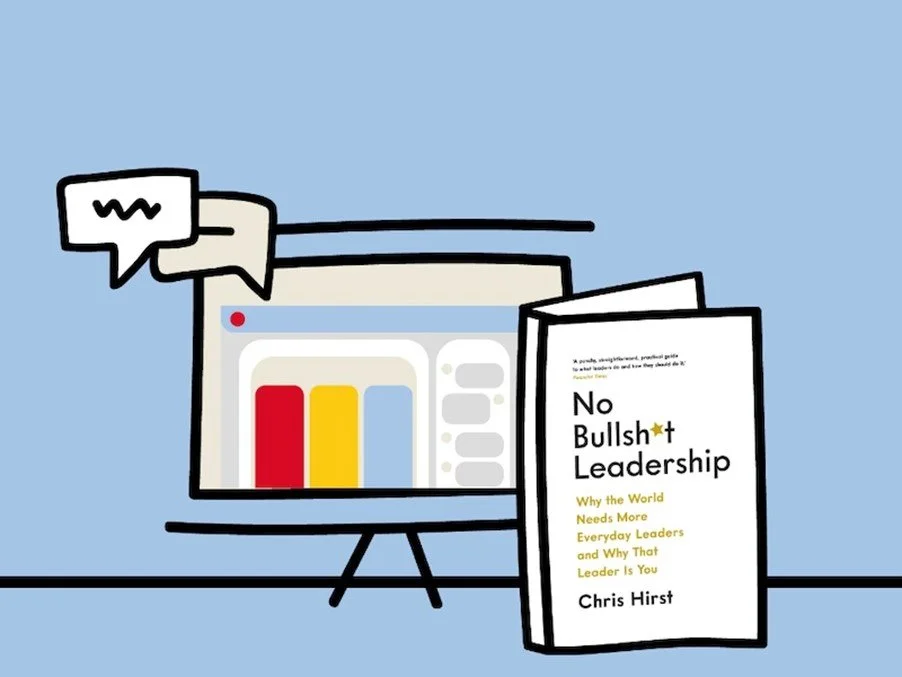
Popular 'No Bullsh*t Leadership' course now available in SA
Suitable for communications professionals at any stage of their career, this e-learning programme can train anyone to lead and lead well
“For over 45 years, AAR has been at the unique intersection between brands and agencies, and we have seen first-hand how great leadership sets industry leaders apart,” says Victoria Fox, CEO of this international marketing consultancy.
“We believe leadership must be thought of and taught in a completely new way, and that companies who embrace this challenge will gain a considerable competitive advantage ... We can’t just wait for new leaders to emerge; we must nurture them to succeed.”
With this in mind, AAR has developed a new e-learning programme, titled “No Bullsh*t Leadership”, in collaboration with Chris Hirst, former CEO of Havas Creative Group and author of best-selling business book of the same name. It aims to “accelerate the introduction of a new generation of everyday leaders by democratising leadership training for all,” not just those in the C-suite.
First launched earlier this year, the No Bullsh*t Leadership e-learning programme was only initially open to those based in the UK. However, the Independent Agency Search and Selection Company (IAS) — the AAR Group’s partner in SA — believes this online course will be relevant to agencies and brand marketers in this country.
For this reason, enrolment for the next edition of this UK CPD-accredited online course, starting in October, is now open to communications professionals in SA. There are 40 places available and the programme is suitable for people at any stage of their career.
The No Bullsh*t Leadership e-learning programme is led by Hirst and AAR consultant and executive coach Vonnie Alexander. It comprises eight modules covering different aspects of leadership, including sessions on the importance of decision-making, why self-care is vital, and how to have difficult conversations.
It will feature guest speakers including Harpreet Kaur, the 2022 winner of the UK-version of The Apprentice, and attendees will also have access to an online discussion forum.
I passionately believe that there is no leadership type. Everybody can lead and lead well – and the 'No Bullsh*t Leadership' programme is how
Chris Hirst, author of best-selling business book 'No Bullsh*t Leadership'
“Leadership is always the problem and better leadership is the only solution. Yet so much of what we’re told and sold about the subject is just snake oil,” says Hirst.
“This creates two baleful real-world problems: it inhibits those already in leadership positions from fulfilling their potential and worse, excludes whole swathes of society from believing it is something they can aspire to.
“I passionately believe that there is no leadership type. Everybody can lead and lead well — and this programme is how.”
Johanna McDowell, founder and CEO of IAS, says: “We are very excited that the No Bullsh*t Leadership e-learning programme is now open to SA and rest of Africa.
“We have had many enquiries from brands and agencies about leadership programmes that are specific to the marketing and advertising industry. This course will definitely be very relevant in terms of growing leaders in this country and beyond.”
For more information, or to sign up for the No Bullsh*t Leadership e-learning programme, click here.

7 insights from #Cannes2023
It seemed this year's Cannes Festival attracted more marketers than ever before. Some accompanied their agencies, some joined their global company meetings, the WFA seminars, the CMO Global Growth Council, and client and agency celebrated together the Lions awards they won.
Cesar Vacchiano, Scopen International president, gives insights from Cannes Lions 2023.
The big consultancies occupied the Cabanas. More than ever platforms and tech companies occupied the beach, hotels, and restaurants. They hosted the most sought-after parties, bringing artists and singers. Those without passes were even swimming through the sea to approach the beach where the parties were being held. Police boats turned them back.
7 Insights from Cannes Lions 2023
1. The buzz word: AI
The buzz word of this year’s festival was AI. Everybody was talking about the fears and the opportunities. The learning is that we must think of it as a tool, as it is going to help us improve what we do. It is certainly going to make some jobs obsolete, but it will also open opportunities to work in this new environment, as always happens with new technologies and tools.
Some live demonstrations took place, and it was amazing to see how songs can be written using AI, showing that we must take it as a new tool and not as a threat, and that it will help us to reinvent ourselves because this is how our world progresses.
2. Diversity and inclusion
Another big topic was around diversity and inclusion which is being heavily supported by big brands that have realized its importance. It is not only the governments, NGOs, or small projects around the world, but the big multinational brands supporting and doing authentic things that change the world for the LGBTIQ+ collective as well as the inclusion of women. Even the festival supported this important issue with the most diverse panel of jury presidents ever.
3. Social media
Insights convinced us that social media is one of the most important platforms to connect with the younger generations and seminars focused on the power of key opinion leaders and influencers. We need to understand what is happening with these creators and how they work, coordinating and integrating themselves with the strategies of the brands. Looking at the social market, Social Commerce is going to reach $1 trillion US dollars, so we really need to pay attention to what is happening in this space.
4. Rise of B2B
Last year we saw the rise of the B2B category. This year we have seen this category keep growing, and some extraordinary cases even won Lions. The most impressive work was done by Intel that allows for the detection of fake faces as a B2B tool, done in a very creative way.
5. Pharma is growing
Another growing area is Pharma. More and more companies and agencies are competing in all its categories. It is a difficult sector with many barriers and legal restraints. What is amazing is to see how Pharma is helping to end many diseases and make life easier in emerging markets.
6. Gaming and its power
We also saw a high presence of gaming and the power it wields. In the past it was all about Fortnite, and it was more like a trend. Now we see multiplatform campaigns and the power of platforms such as Twitch.
We saw a campaign from the Bank of Montreal that involves streamers talking about financial education on Twitch engaging young people, Gen Z, for hours learning about finance.
7. Creativity more important then ever
Attending the Awards galas, you really have the feeling that creativity is more important than ever. You appreciate how ideas differentiate brands, how ideas move people to engage with brands, and how innovation improves people’s lives and makes the world a better place to live in.
10 inspiring campaigns
I also encourage you to learn from the following 10 inspiring campaigns that won awards in many categories, and approach briefings and challenges in many different ways:
1. Mouthpad by Wunderman Thompson Lima
2. Knock Knock for the Korean Police by Cheil
3. The Artois Probability for Stella Artois by Gut Buenos Aires
4. The Last Photo a Live Event Outdoor by adam&eveDDB
5. Fitchix for Honest Eggs by VMLY&R Melbourne
6. Shellmet by TBWA Hakuhodo
7. Schoolgirl Newscasters by Impact BBDO Dubai
8. Fondation Anne de Gaulle by Havas Paris
9. Heinz Draw Ketchup by Rethink Toronto, 1
10. The Foamy Haircut for Brahma by Africa Sao Paulo
The last two are 2022 campaigns that won in 2023 demonstrating creative effectiveness. I have selected work from different countries and regions that demonstrate that great creative ideas come from everywhere.
Congratulations to the South African agencies that won Cannes Lions this year. Ogilvy (the most awarded South African agency), FCB Africa, Grey, Grid, and Promise must be very proud because it is more and more difficult to win.
There were more than 27,000 entries and only 3% won a Lion. South Africa also won in the Young Lions competition, something also very difficult to achieve.
The team from Joe Public, Raphael Janan Kuppasamy and Bernice Puleng Mosala, with Your Home A Classroom, won in film competition focused on raising awareness amongst mothers in India to take charge of their young children’s education. Thanks to Cannes Lions our industry is inspired and celebrates its talent and uniqueness, more so each year.

More findings from Scopen's Agency Scope in Mexico
The selection methods most commonly used in Mexico continues to be pitching (for both creative and media agencies), which is used in 78% of cases (70% in 2021) and in line with the global average (77%).
Internationally, China is the leading country in creative agency selections by pitching and 95% of accounts are won in this way.
This is according to Scopen's seventh edition of its biennial study Agency Scope in Mexico.
Increased time with creative and media agencies
Mexican advertisers work with a creative agency, on average, for a period of 4.5 years (3.9 years in 2021), the same as the global average. Portugal is the market where the relationships are longest (6.4 years) and China where the relationships are shortest (3.1 years).
With media agencies, the average duration has also increased in the last two years: 4.1 years in 2021 and 5.2 years in 2023. In this case, the global average is 4.9 years, and Portugal is again the country with the longest relations (6.5 years) and China where they are shortest (3.1 years).
Most common remuneration model
An annual fee remains the most common remuneration model for creative agencies (in 69% of cases), ensuring a continuous relationship, although at the same time, there is an increase in the number of advertisers who declare to pay their agencies “for specific projects” that are approved throughout the year (36% in 2023 vs. 32% in 2021).
In the case of media agencies, the most used method is also the Iguala (Annual Fee) which has significantly increased compared to the previous edition (80% in 2023 vs. 68% in 2021), with less and less renumeration by commission on media investment -online/offline- (15% in 2023 vs. 26% in 2021).
On the other hand, the variable offered to media agencies is increasing in practically all the markets in which this study is conducted and the fact that the media agencies commit to results and the success of their campaigns, helps establish a variable based on data targets that can be measured.
Satisfaction with agency work
Of Mexican marketing managers, 87% declare themselves satisfied with the work done by their creative agencies and only 4% declare dissatisfaction with the service they receive.
The clients of independent agencies are the ones who are most satisfied with their agencies (92% are satisfied compared to 81% in the case of clients who work with group agencies).
The high satisfaction level explains the low intention to change agencies in Mexico, where only 9% of advertisers say they are thinking of changing agencies (and 4.1% are sure of the change).
Lower satisfaction with media agencies
In the case of media agencies, the satisfaction of advertisers is lower (80% declare themselves satisfied and 29% declare themselves “very satisfied”). However, only 7% declare dissatisfaction (2% “very dissatisfied”).
This also explains an increased intention to change the media agency of advertisers (14%), a figure that doubles the percentage of dissatisfied customers, so that, even if they are satisfied, there are advertisers who are considering changing.
Growth in business
The satisfaction of Mexican advertisers is also reflected in the contribution that marketers assign to the growth in business of the companies in which they work. In the case of creative agencies they attribute, on average, a percentage higher than 24% and in the case of media, just over 26%.
Most valued awards
The Effie Awards (42%) and the Cannes Lions Festival (32%) are the most valued awards in the sector by those responsible for advertising & marketing in Mexico, well above the rest and with more mentions than those obtained in the previous edition in which, mainly due to the non-celebration of many festivals due to the pandemic, the communications to promote them also decreased.
Most admired company and campaigns
In this edition, Coca-Cola appears in first place as the most admired company for its marketing and communication in recent years, followed by NIKE and ABInBev-Modelo.
Among the campaigns most valued by marketing managers, Corona takes first place (coming from 22nd in 2021), Victoria takes second place (from being 12th) and Coca-Cola takes third place (second in the last edition).
Most admired agency
As for the creative agencies that stand out, seven rankings have been developed that analyze different aspects: Spontaneous knowledge, Creativity, Exemplarity, Attraction, Perception of the market, Customer evaluation, and Opinion of the competition. In them, remarkably, as in the previous edition, Ogilvy leads five of the seven rankings and appears in second place in the ranking of Opinion of the competition.
Among the media agencies there are six rankings, given that Creativity is not valued in this case.
In this edition, Starcom appears in all six, leading the rankings of Attraction, Customer Evaluation, and Opinion of the Competition. Also noteworthy are Havas Media (which appears in four, leading in three of them) and Mindshare (which appears in three).
The first part of the findings can be viewed here.

#MasterclassNotes: Leadership needs to come from the middle
Earlier this year at the AdForum Worldwide Summit in New York City, one of the topics of conversation among my fellow pitch consultants was the apparent relentless change at C-suite level among agencies. Here in South Africa, the same is happening and, in the last few weeks in particular, there have been changes at top level in both agencies and among brands.
Global agency leaders have been moving on at a rapid pace — not necessarily to new agencies but often on to the marketing side of the industry or out of the industry altogether. We’ve also noticed many changes among the leadership within global brands and business, and there appears to be little succession planning.
To add to that, an early trend that’s emerging from local research currently in the field is the indication that senior media agency staff are moving across to brands to take up newly created media leadership positions there. What will be the impact of all of these senior level changes and how do we mitigate this?
Leadership development gap
In a 2023 Global Leadership study conducted by the Development Dimensions International (DDI), only 40% of people reported that their company had high quality leaders. In the same study, nearly 80% of companies believe that there’s a leadership development gap. In my work with clients and agencies, when I talk to brands and to agencies, I hear how they’re struggling to find time to train and develop new leaders. I’ve also often been asked about leadership development — and especially more so recently.
Leaders aren’t only in the C-suite, too.
In reality, a leader is anyone with influence, responsible for guiding people and projects from point A to point B. It’s more important to understand this than ever before. I see this firsthand as clients are always asking to see the day-to-day leaders, as opposed to the C-suite leaders, from agencies during pitch processes. It’s the day-to-day leaders who’ll have the most impact on the clients’ businesses.
No longer top-down
Leadership is no longer top-down, so much leadership needs to come from the middle.
Digital transformation and covid have completely redefined the way we work and people now are required to master an ever-expanding set of core skills. The demands of business means that people are being promoted faster but they may not necessarily have the experience to navigate at the new level.
We need to start talking about leadership coming from the middle. In short — and to quote from No Bullsh*t Leadership: Why the World Needs More Everyday Leaders and Why That Leader Is You, a bestselling book by Chris Hirst, former Havas Creative global CEO and Grey London CEO — which, by the way, he openly encourages:
Anyone who has people who depend on them is a leader
Our societies, businesses and communities need more and better leaders from all walks of life
Top-down hierarchical leadership doesn’t work anymore: we need a new way for new people
The bullshit that surrounds the subject of leadership both inhibits people from fulfilling their potential and excludes people from believing they too could lead
No-one is born a leader — there’s no leadership type.
We can all lead if we choose to — and we need practical help so that we know how.
Agency Scope finds Mexican advertisers double digital budget
The marketing and communication budget that Mexican advertisers allocate to digital has more than doubled in the last eight years.
This is one of the conclusions of Scopen's seventh edition of its biennial study Agency Scope in Mexico.
The fieldwork of this edition took place from February to May of 2023 and the results have been presented to subscribing agencies in recent weeks.
This year a total of 739 professionals were interviewed: 305 decision makers of the highest level in marketing, communication, and advertising from 244 advertising companies, including the most important in the country; 434 working in creative and media agencies (265 and 169 respectively).
52% women
Of the professionals from advertising companies interviewed in 2023, 52% are women, most of them work in Mexico City (81%), have an average age of 39.5 years, and the position with the most representation is the director of marketing (24%).
On average, they have been with their company for just over seven years and more than three years in their current position.
They are mainly directors of foreign multinationals (66%) predominantly from the mass consumption sector (51%).
Among the creative agency professionals, the majority (58%) are men and the position which has the most professionals interviewed is the General Creativity Director (22%).
Among the media agencies, there are more women (59%) and the most interviewed position is that of Director/Head of Accounts (21%).
Lowest investment ratio
The investment ratio (Budget for marketing/ communication/advertising vs. turnover) of Mexican advertising companies is currently 0.2%, somewhat lower than the previous edition (0.3%).
It should be noted, however, that turnover has experienced a significant increase: the budget planned for 2023 more than doubles the amount invoiced in 2022.
Mexico continues to be the market with the lowest investment ratio among the 10 markets analysed (with a global average of 2.6%) and where India and South Africa exceed 4%.
Digital
As for the distribution between the different areas (ATL, BTL and Digital), the budget allocated to digital has more than doubled in the last eight years (2015=23%, 2023=49%) and in some agencies, they have already reached the halfway point.
Thirty-four (34) percent of the budget is spent on ATL and 17% on BTL. Mexico is the third market of those analysed in this study with the largest budget for marketing, communication, and advertising allocated to digital, after China and Brazil (50%).
Among the different digital disciplines, the largest portion of the budget is allocated to Social Media and Influencers (34%), followed by Digital Paid Media (29%).
César Vacchiano, CEO and president of Scopen, explains, “Advertisers continue to bet on the digital medium and for them it is key to find the best partners in this area. Digital capabilities are becoming the key criteria for selecting agencies that reach a shortlist.”
He adds that this means there is a desire to innovate and bet on more groundbreaking and risky ideas that will help to raise the prestige of, and differentiate the brands that stand out in the minds of consumers.
“In the media field, the unconstitutionality of the advertising law will again bring doubts and uncertainty in the short term, but in the medium term it again opens opportunities for the medium-sized independent agencies that suffered the loss of customers and saw their businesses shrink.”
Specialisation and collaborators
Most advertisers (65%) say they work with agencies specialised in different disciplines (PR, BTL, and Digital) but, nevertheless, looking ahead, 49% say they would like to work with an integrated agency.
At the international level, there is a group of countries with a greater desire to work in the future with an integrated agency (Argentina, Brazil, Chile, Mexico, Portugal, and South Africa) and, another group, where the desire to work with specialised agencies is higher (Colombia, Spain, UK, China, and India).
In Mexico, advertising companies work with an average of almost 11 different collaborators to solve their communication, marketing, and publicity needs.
The agents with which they collaborate most are digital platforms (2.8), advertising agencies (2.4), and BTL agencies (1.6). The market where the advertisers work with the most partners is China (25.6), well above the global average (13.5).
Of marketers interviewed, 41% believe that some of the agencies they work with “lead” and coordinate all the agents they work with (the global average is 46%).
It is important to note that media agencies are improving positions as leading agencies and, in Mexico, six media agencies already appear in the Top 15, demonstrating that they also have sufficient capacity to accompany their clients in this work.
As for the disciplines provided by the agencies, which Mexican advertisers consider key for their company and have a greater impact on their businesses, they appear in the first five positions, in this order: Strategic Planning, Creativity, Research, Digital Strategy, and Media Planning.
Building a long list of agencies
The marketers interviewed mainly mention three tools to create a long list of agencies (both creative and media): The work done by the agency (64%), the experience itself, the personal knowledge of the interviewee (42%), and the recommendation of a friend or colleague (40%) are the most mentioned.
Compared to the previous edition (2021) there is an increase in the number of mentions of Experience, personal knowledge of the interviewee and, in fourth place, the group to which the agency belongs is mentioned for the first time.
When it comes to building a long list of agencies in a creative agency selection process, the most decisive aspects are Creativity, Strategic Planning, and the Agency´s team of professionals.
In the case of the media agencies, Strategic Planning appears first, followed by Research and Tools Capacity and Digital Capacity.
Agency Scope analyses, the trends of the advertising market, every second year, to understand the process, perception, and performance of the distinct agencies with which advertisers work and is conducted in 10 other markets besides Mexico: Argentina, Brazil, Chile, China, Colombia, Spain, India, Portugal, UK, and South Africa.

Without fair feedback, even pitch consultants get the blues
For an advertising agency, there is nothing worse than spending hours putting a pitch together but then not winning the business and never knowing why it didn’t make the cut.
“Without feedback, neither a winning nor a losing agency knows what tack they should replicate [or] avoid in the next pitch,” says Johanna McDowell, CEO of the Independent Agency Search & Selection Company (IAS) and Scopen partner. “Equally, there is huge value in knowing why you won,” she says, noting that this is detail you don’t get from the client — often for very valid reasons.
“The value of a pitch consultancy,” McDowell says, “is the provision of feedback to agencies after a pitch, win or lose. Knowing whether they reached stage one or stage three in the client’s determination process is a huge learning opportunity for the pitching agencies, and it’s clear to us that they see the real value in this.”
To demonstrate this importance, McDowell says pitch consultants are occasionally asked to pitch, with the marketer calling on two or more pitch consultancies to bid for their work.
“We were recently invited to pitch and — in all honesty, this is not something I relish. But it seems I had lessons to learn. One of the requests I made to the client when we responded was to have the assurance of detailed feedback, to which they agreed.”
While the pitch was unsuccessful, McDowell says the client’s assessment was so valuable that it facilitated a review of her company’s business model. “The client was looking for more innovation and for a long-term relationship after the pitch process. These are things we provide — but we just didn’t propose them in this instance.”
Sometimes, it’s the simplicity of a requirement that gets overlooked in the frenzy of the upcoming pitch. “Our lesson was a simple one: even pitch consultants need feedback.”
McDowell’s experience highlights why feedback is vital. “The ‘why’ helps agencies to rethink how they’ve been doing things; and for pitch consultants to view things on a longer-term basis than they may be used to,” she says.
The real, ongoing value for anyone involved in a pitch is being willing to give and receive feedback, she says. “First, the ability to provide feedback is a real skill, and something we understand as core to our involvement in the pitch. It requires detailed written reporting at every stage of an agency’s pitch process to provide an understanding of what went wrong — or right — and hopefully encourage a deeper look at how they put their pitch together. Given that this commentary is completely anonymous, it’s clearly based on principles and not on personalities. It’s robust data and not opinion, meaning the agency can only benefit by taking it on board.”
What helps agencies, and even clients, is the quality of the discussion about the pitch process, their proposal and how the client is evaluating it. It all requires a lot of paperwork and thoroughness. “When a client is evaluating a set of credentials or a pitch proposal, pitch consultants take notes and are able to relate perceptions and decisions verbatim. Our clients know upfront that this is part of our function, and all buy into the concept of a quality pitch process and the ethics involved,” says McDowell.
The bottom line is the real, workable value that feedback provides and an agency’s willingness to take that value and run with it.
“The pitch is here to stay. Like it or not, you have to put yourself out there in order to win business, then take the feedback and make it work for you. When I look back on the feedback we received, every point was valuable to us as a company, [showing] what we could change to achieve better.”
All quality ethical critique is advantageous, and a recipient looking to improve their pitches will ignore the blues and seek the clues that will ultimately result in a winning pitch.

IAS Agency Credentials Award 2023: Guidance for a shot at the prize
It’s that time of year again, when agencies get an opportunity to shine up their credentials and polish their presentation to marketers waiting to be impressed. But, says Johanna McDowell, Independent Agency Search & Selection Company (IAS) CEO and SCOPEN partner, make sure there’s more substance than shine...
The DMASA Assegai Awards’ call for entries is a good time to remind agencies that the prestigious annual event introduced the IAS Agency Credentials Award as a new award category in collaboration with the Assegai Integrated Marketing Awards in 2016. It was a first in South Africa and remains the only award in the country that recognises the significance of agency credentials.
The aim of the award is to acknowledge an agency's credentials and its ability to wow marketers. So, what are credentials supposed to do? Essentially, they inform marketers how agencies market themselves, so positioning that comes across as distinctive and case studies that stand out garner attention.
What marketers always want to know is the history and general information about the agency; its client list and standing in the industry, backed up by press coverage and case studies; its points of differentiation; and its proven value for money. Company culture, BBBEE standing and procurement recommendations are also crucial to a client determining the value an agency provides.
Who judges the agency?
In creating this award, we enable agencies to highlight their best suite of services, show up, and be seen. The secret sauce, though, is who the judges are. What we don’t want is one agency judging others – aside from any possible bias, there’s no better group to adjudicate than the very group who choose agencies from pitches: Marketers.
To find an award platform that fits the bill, we reviewed all the industry awards and their judges. The best fit for the IAS Credentials Award was the Assegai Awards.
As a judge myself, it was clear that half or more of all judges were marketers - which made sense for two reasons: firstly, marketers reviewing agency credentials would give precise, valuable feedback and acknowledgment about what works for them. Secondly, agencies would have the opportunity to showcase their credentials to a group of top marketers they may otherwise never have access to.
The latter has been lauded by previous agencies as being an extremely valuable opportunity to put their names and talent on show.
A virtual judging session including the IAS and the marketers who will be adjudicating the IAS Credentials Award will ensure that all are aligned for the selection of the credentials most deserving of the award.
It’s a real-time opportunity to see the points of which all judges are aligned, with a deep-dive discussion to determine a winner, and not a mere allocation of points. This format also provides participants to engender maximum impact on today’s marketers.
Entries are open now and will close at the end of August.
As always, we look forward to these esteemed industry awards. You may not walk away with a trophy, but we’re confident your next pitch will certainly be a winner.

The elusive signature: Sign of the times?
It’s a go… all parties are on board and happy with the KPIs, SLAs and potential ROIs. The only thing missing is the client’s signature. So, what’s causing ink-on-paper failure in the industry?
We started noticing this trend towards the end of last year when clients were slow to sign. The topic came up at AdForum earlier this year, so it’s not just a South African phenomenon.
When pitch consultants are involved in a project, getting the fine details sorted is part of what we do – but we’re battling to get the elusive signature too.
To be honest, it’s baffling. Are contracts not worth the paper they’re printed on? It’s a question everyone wants answered. Fees have been negotiated; terms of reference agreed on – but nobody’s in a rush to sign the contract.
Tying down the signature
Running through some possible scenarios, we know that procurement managers and legal teams are inundated with all kinds of necessary tasks, so it’s likely not seen as a priority. I’m not sure how strict the marketing and procurement teams are about getting the signature tied down.
In fairness, even 10 years ago a complex contract would take several months to sign and in the interim we would have a memorandum of understanding, which secured our discussions.
So, here I am thinking contracts are really important to both parties, and now I’m not sure that they really are… and colleagues at AdForum noted the same.
How important is the contract?
This leads me to another consideration. We can spend a lot of time discussing a contract – the fees, the resource plan and scope of work, and the people who will be involved.
But are we spending enough time talking about ways of working? Perhaps there should be a greater focus on the ways of working as opposed to contracting.
It seems that not enough time is spent on the way we are going to work together, which may include who is responsible for getting the contracts signed. This usually falls to the agency and many of them are fairly strict about getting the T crossed and I dotted.
There’s no fixed framework or person to control this, which may confuse things. In 17 years of running our business, we’ve always been unerring in making sure contracts are signed, and what’s happening today looks remarkably like apathy.
What do contracts cover?
It leads me to think that while a contract is all well and good, what does it really cover?
Contracts have changed hugely over the years, from those that were signed for a 12-month fixed term with a three-month notice period.
We see very few like that today, with the exception of a contract involving a large media agency component, where rules and payment terms are very strict, due to the inflexibility necessary in the relationship with media owners.
When it comes to contracts between creative agencies and clients, certain clients – such as financial services – are very strict about their contract, and they ensure they are signed. It’s a long process with multiple hoops to jump though, but signing is vital. Procurement personnel work the same way.
Perhaps it’s that more clients are working on a project-to-project basis and not a fixed retainer that makes it appear less important to have that ink on the paper; or that work carries on even without that final signing.
Assurance of go-ahead
If we’re involved, we get the client to sign a letter of appointment for the agency, giving them the assurance of go-ahead, subject to contract. We ensure all letters and contracts are being dealt with by appropriate parties. If there is no consultancy involved, client and agency deal direct.
Again, fin services won’t budge without a signed contract, due to issues of confidentiality and governance.
The real point here is that contracts are not just about cost and payment. They’re about how the teams will work together and how often they will meet; the rules of our relationship engagement and how we will best manage them; what are the deliverables, KPIs and content of the work each team will provide; and what are our recourses when things go wrong.
Perhaps the opportunity here is to spend the inevitable time delay focusing on the working relationship – in the end it is that chemistry which will ensure the contract renewal whenever that might be.
Or read online

Enthusiasm high as AGENCY SCOPE research includes more industry leaders
With renewed energy for a far greater number of interviews to undertake for SCOPEN 2023-2024, AGENCY SCOPE research professionals are well into the first month of fieldwork, buoyed by the enthusiastic reception the study has received by marketers and agencies. Within the first three weeks we saw over 150 marketers committing to an interview.
Says Johanna McDowell, SCOPEN partner and CEO of the Independent Agency Search & Selection Company (IAS): “Sentiment among industry leaders is overwhelmingly positive, indicating that AGENCY SCOPE is firmly part of our industry culture now.
“It is discussed and recognised by industry as the authority on how marketers are thinking about agencies and how they view the challenges they face in their own environment, and the ripple effect this has on their agency partners.”
The fifth wave
As the fifth time the research is being undertaken in South Africa, McDowell says this irrefutable recognition from the industry is extremely gratifying. “It is now used as benchmark,” she asserts, “and when agencies are listing their credentials, their position in AGENCY SCOPE is something they include, chiefly with regard to the industry’s recognition of them and their competence levels.
“It’s not just the agencies touting this information – it is because marketers have recognised the value of AGENCY SCOPE that it has become so important to the agencies. The value of the research content and its findings has grown to industry standard level, which we’re very proud of,” she says.
The face-to-face interviews comprise more leading marketing professionals, decision makers in the marketing and communications industry from the largest companies by ad spend across marketing and agency industries.
Data is sourced not only from CMOs but CTOs with invaluable technical knowledge; but also key digital leaders whose feedback in this digital era rank with the C-suite’s in importance.
Who’s behind the numbers...
It is intended that the composition sample for SCOPEN 2023-2024 will include interviews with more than 300 leading marketers from 250 companies. Over and above that there will be input from agencies and media owners via online, much shorter surveys. Cesar Vacchiano, President and CEO of SCOPEN, notes that the strategy in extending the research to more companies and their key players is the vital feedback that highlights the growth and challenges of all sectors.
“Both the industry recognition and our extended research reflects the importance of AGENCY SCOPE in South Africa, where it has achieved the levels we see in other countries like Brazil, Spain, Colombia, China – also emerging markets.”
He adds: “South Africa’s value to SCOPEN as a country with a robust creative reputation and well-regarded industry image is noted globally.
“It has been a very important country partner for SCOPEN over the last eight years and has shown me that our belief in South Africa was reciprocated by your belief in AGENCY SCOPE.”
From the start, Vacchiano believed the uniqueness of the AGENCY SCOPE study would be something South Africa’s marketers and agencies would embrace, as there was nothing like it here before.
McDowell and Vacchiano agree that industry response to AGENCY SCOPE’S growth in stature makes it an essential tool for marketers and agencies in South Africa. “When we look back at to the first time we undertook the research here, nobody really knew what SCOPEN was or what it was attempting to achieve,” says McDowell. “Word in the industry was, ‘what is this AGENCY SCOPE story?’ Now, it’s part of the calendar.”
Fieldwork will continue until the end of August, with results presented to industry from the end of October. “We look forward to the research and its analysis making an even greater positive impact for marketers and agencies,” says McDowell.
You may also want to read Agency Scope SA 2023-24 field work to begin — The IAS (agencyselection.co.za)
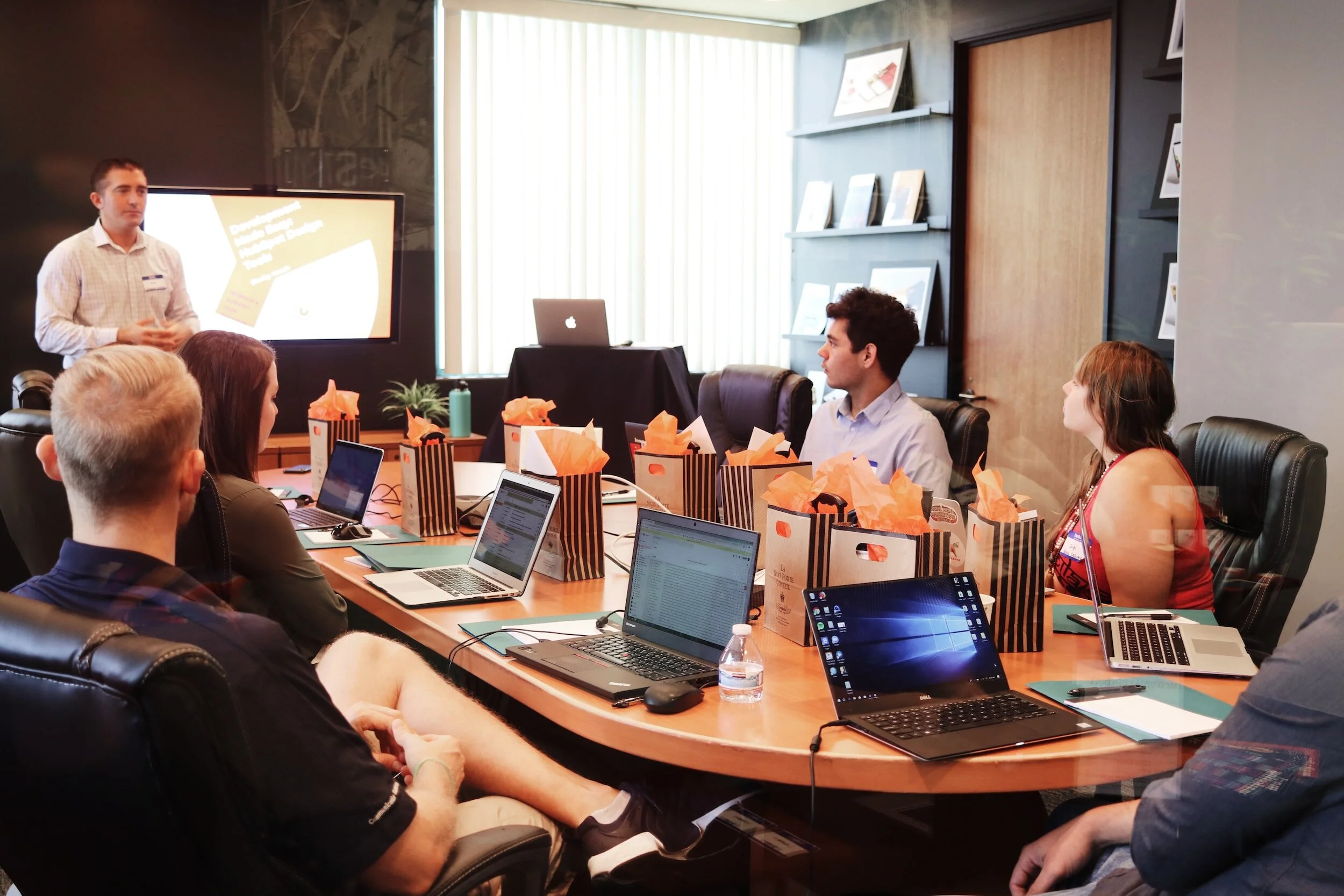
The jury's in: Reality wins in visual versus virtual pitches
There's no question Zoom, Teams and other online communication platforms threw us a lifeline during the pandemic, but even as we get used to remote and hybrid boardrooms and studios, nothing substitutes for in-person pitches.
Even as we get used to remote and hybrid boardrooms and studios, nothing substitutes for in-person pitches writes Johanna McDowell, CEO of the Independent Agency Search & Selection Company (IAS) and Scopen partner
At their best, pitches are not easy and the merits of undertaking them in person are innumerable. No matter how well-written a pitch is, in-person is what spotlights chemistry; the ability to look at body language and gauge how people are really engaging and reacting.
It’s about reading the room as much as it is about what the agency pitching can do, and it just doesn’t translate as effectively online.
Because face-to-face is real, pitches in person are also more likely to get a real-time decision.
What we saw during the pandemic as we continued doing pitches even in instances where the agency hadn’t met the client at all, at some point it became clear that a meeting of the teams would be a critical success factor.
Some marketers and agencies have still not returned full-time to their offices and are working remotely. Our message to them is one of strong encouragement to ditch the virtual pitch and meet in person as much as possible.
When it comes to selecting an agency, there’s no question that doing so face-to-face enables real interaction which is ultimately a huge part of the deciding factor.
Pitches are feelings and facts
Because the pitch process should allow for determining whether there is chemistry between the marketer and the agency, only a Q&A session may be conducted online – but even then, there’s a missed opportunity to really get to know each other; how you respond and talk things through and sense whether or not you’d be a match.
Without relying too heavily on the obvious cliché – online dating – in many instances, what you see on a screen is not what you get in the real world; and I believe it takes two and maybe three in-office interactions to truly feel whether the creative X-factor is there.
We want the client to actually experience the people – not just those who are part of the pitch, but those who also make up the agency’s culture.
See agencies in their natural habitant
The IAS encourages these chemistry sessions at the agency’s premises, which enables the client to see the agency as they really are, in their natural habitat.
We want the client to actually experience the people – not just those who are part of the pitch, but those who also make up the agency’s culture. It’s important to see how and under what circumstances they work and how they interact with each other naturally.
In most cases, an agency is presenting in the client’s environment, which gives them a sense of the marketer’s domain. If both parties are comfortable with the others’ style and conditions of work, chances of starting off well and maintaining a long-term relationship are far greater.
What it boils down to is “clues”; those non-verbal flags or fanfares humans get when they feel something good – or not good – about an organisation, which are impossible to sense virtually.
While there are still pitches happening in the virtual world, I’d actively discourage them unless the client is an international client and even then, a local firm is charged with bridging that gap for the client using their experience and knowledge of the local players.
In a marketer-agency relationship, the question is – often rightly so - “How does this team collaborate creatively, effectively and timeously when they’re not all in the same space?”
Finally, we note that a fair number of clients are reluctant to work with agencies that are fully remote, which again speaks to the idea that there’s something “not real” about a team you can’t interact with in person.
In a marketer-agency relationship, the question is – often rightly so - “How does this team collaborate creatively, effectively and timeously when they’re not all in the same space?”
Marketers who are working remotely understand the time constraints and difficulties in getting things done rapidly, and bear this in mind when dealing with an agency that would need to contact, discuss and deliver the goods with speed.
Ultimately, the marketing jury is in: With a decision-making process as important as retaining a new agency, marketers are opting for full-time, in-studio agencies – and face-to-face meetings.

Agency credentials: Marketers look past awards to get to the grit
Everybody loves an award - and winning agencies almost always get a second look. However, Johanna McDowell, CEO of the Independent Agency Search and Selection Company (IAS), writes that they're looking for grit - credentials that outshine trophies.
Every agency strives for creativity, that ‘special sauce’ that sets them apart from their peers. But with today’s budget constraints and a digital explosion that can edge a brand from good to great with just one campaign, marketers want grit: and this is seen in Credentials that show the backbone of an agency.
Having the confidence to reveal credentials in a pitch shows a marketer that the agency understands the client’s business requirements and the importance of ROI. Highlighting the history and their current client list notes the agency’s standing in the industry, especially when backed up by press coverage and case studies. What any marketer sees here is value for money.
Add BBBEE standing and procurement recommendations to this agency culture, and the client gets the full picture and not just the frame.
Sessions to get your credentials glowing
As we head towards the 2023 Assegai Awards, incorporating the IAS Agency Credentials Award, the importance of overall expertise is under the spotlight. Those who have followed the IAS Credentials Award journey will know that the judges are mainly marketers to ensure fairness and not have an agency judging a peer.
Judges include overseas experts in marketing, along with several renowned local marketers. To ensure agencies are clear on how to enter the IAS Credentials Award, this year sees an event we’d suggest you put on your “must attend” calendar.
The IAS is offering a free forum in June to run its agencies wanting to enter through the process of submitting their credentials. With this invaluable input, we’re thrilled that Ethan September of the Direct Marketing Association of South Africa (DMASA) will participate.
We urge agencies to join in the session to ensure that their entry meets the specifications and provides the opportunity to shine. The format encourages agencies to present their best sizzle to a calibre of marketing experts they ordinarily may never meet.
With entries open now, the Assegai Awards along with the IAS Credentials Award 2023 close on 31 August - so get your creds out, give them a session or two of polish, and make sure your entry gets noticed – for grit, not just shine.
You may also want to read IAS Agency Credentials Award 2023 beefs up agency opportunities to shine — The IAS (agencyselection.co.za)

Agency Scope SA 2023-24 field work to begin
For the fifth time in South Africa, Agency Scope researchers are ready for the fieldwork required over the next four months to gather the data that will culminate in the collation, analysis and publication of a body of work that brings to light what marketers really think.
The face-to-face interviews - approximately 60 minutes in length per professional interviewee - results in a non-biased, academic-style view of the facts for the Agency Scope report
For the fifth time in South Africa, Agency Scope researchers are ready for the fieldwork required over the next four months to gather the data that will culminate in the collation, analysis and publication of a body of work that brings to light what marketers really think.
Fieldwork will be completed by the end of August and analysed in September, for presentation of reports at the end of October.
Johanna McDowell, Scopen partner and CEO of the Independent Agency Search & Selection Company (IAS), notes that this time, the team is aiming to do far more interviews with CMOs, CTOs and companies in a more robust, broader sample to ensure Agency Scope relevance as the marketing and communications industries change.
Quality of the research
“The quality of the research team is unmatched in this sector,” she says.
Four experienced women with long-term business experience make up the team.
“The value of professional researchers who are not involved in our industries is that their face-to-face interviews - approximately 60 minutes in length per professional interviewee - results in a non-biased, academic-style view of the facts,” states McDowell.
The team is geared to ask the questions that delivers the kind of information that sets Agency Scopeapart, McDowell adds.
“Sample sizes have grown over the last four waves of the study and we’re looking to increase both the number of companies and interviews per company. It’s important to keep innovating,” she says.
“Last year was the first time we interviewed media owners and we’ll be doing so again this year.”

Methodology
As with the previous study, the Agency Scpe’s research target base includes leading marketing professionals and decision-makers in the communications industry from the largest companies by adspend.
The base covers those professionals in companies, creative agencies, media agencies and media owners.
Says Cesar Vacchiano, president and CEO of Scopen International: “Both in South Africa and globally, our interviews with industry leaders are guided by industry trends and what marketers think about how these are impacting their industry.
“As part of the 3,000-plus marketing professionals and around 8,000 marketer-agency relationships analysed and tracked by Scopen, South Africa brings increasingly important information to our global feedback.”
Vacchiano and McDowell believe this year’s Agency Scope study will be one that puts figures to the changes the industry has seen since 2022 as well as the overall impact of changes in the way marketing professionals across the board are working with their agencies.

Media auditing and assurance: Would you buy a car off its spec sheet?
It’s not a question of reliable information as much the client not having a complete understanding of the sector and what a really good deal looks like.
Media agency pitches without media auditing and assurance are hollow, time-wasting, and could cost big money in the long run when marketers are faced with the number of decisions a large spend involves.
This is the word from CEO of the Independent Agency Search & Selection Company (IAS) and SCOPEN partner, Johanna McDowell, who adds that for the best media agency selection to take place in a level playing field, the audit is essential.
“Consider a media agency selection process where there are four media agencies pitching. How does the client evaluate the best deal, when it’s not just about price, but about rebates, early-booking advantages, tools the agencies are using, the whole spectrum of the media ecosystem? For many clients, it’s a mystery – and one they must take at face value unless they have quality assessments on the offers in their entirety.”
Reliable information
Noting that media agencies are highly professional, McDowell asserts it’s not a question of reliable information as much the client not having a complete understanding of the sector and what a really good deal looks like.
“We realised many years ago that the most valuable information a marketer can get is gleaned from a media audit,” she says. “There is so much ‘unknown’ within the media industry – not just with regard to media buyers, but also with media owners – that there had to be a way of demystifying the components of the process.”
Take, for example, a bank is pitching out its media work after the average four-year relationship with their agency. Their media spend is generally a hefty one and the bank – like all clients – wants to be assured it is getting the best possible deal. Questions include, “What are my rates going to be? What sort of deals am I going to get? How will we maximise our money, over and above the media strategy?”
Money often wins the pitch
Media agencies approach media owners – likely all the same media owners – to negotiate the kind of deal most beneficial to their client, McDowell suggests. “Each will be quizzing the same TV, radio and outdoor media owners but very often what wins a pitch when it comes to media is – like it or not – the money.”
So, how does the client check that they’re getting the best possible rates, and not just an agency undercutting others? “Auditing and assurance is not just about the cheapest rate, but optimal value all round. There’s far more to the discussion than the fee structure.”
Now add digital to the mix
An added – and burgeoning – layer clients need to navigate is digital media, which is vastly more complicated, owing to the sheer amount of technical application that the media agencies provide not just in buying the media, but managing the campaigns.
“Professional media auditing and assurance process does all this. In a pitch situation, we evaluate the rates and special opportunities media owners have proposed, and advise clients on the intrinsic value of those breaks as part of the package,” says McDowell. “This includes considering the costs of the technical aspects and tools required for the various platforms such and television and digital; whether each is actually required; and where there may be could cost savings in the process.”
She further highlights the difficulty for clients to do this, and the near impossibility of undertaking it as part of a pitch process without any media auditing. To present all this cost- and time-saving data, the IAS, in partnership with the Eley Consulting Group, includes a specific framework so both parties are provided with complete transparency throughout the pitch.
Lag on ROI
Eley consultant Richard Edwards says: “Not only does this enable us to give clients the assurance that their money is being well spent, it also means we can suggest a more profitable direction for the agency to take if their return on investment is lagging.”
A media agency pitch without media auditing involved is like buying a vehicle based on the brand’s spec sheet. Says Edwards, “It must be clear that this process is about having the unbiased assurance that optimal performance – in offline or online media – is being reached. It makes no sense that a marketer would not want that.”
He adds that including a media assurance step in a pitch process is not a costly exercise at all and well worth the expense whether the media spend is large or small.
For global brands and businesses, media auditing and assurance is unquestioned as part of any normal pitch process. “We’ve conducted it in South Africa with extremely effective results, where it professionalised and demystified the whole process,” McDowell adds.
Here, Edwards notes that improvement is always a good thing, especially where it results in time and cost savings. “Our audits may not always mean cheaper media in cash terms, but will certainly ensure an agency is delivering as rich a schedule as possible.”
Watch Johanna McDowell, CEO of IAS, on this subject here

Part 2: Chile Agency Scope Study shows data is increasingly important
Scopen's fourth edition of its Agency Scope study in Chile has shown an important change in terms of the remuneration model, with a significant decrease in the number of advertisers who declare they remunerate their creative agencies by Project (7% in 2023 vs. 22% in 2019). A figure that makes sense considering that most relationships are continuous over time.
The most used remuneration model continues to be an Annual Fee (80% in 2023 vs. 87% in 2019) set at the beginning of the year.
Followed by remuneration by Commission on media investment (online/offline) (9% in 2023 vs. 15% in 2019). In general, in this edition, we find fewer mixed models than in 2019.
In the case of media agencies, the percentage of remuneration through an Annual Fee is lower (64%), however payment by Commission rises (38%).
Remuneration by Project is 5.5%.
The ‘ideal’ agencies: Data increases its importance
The main characteristics that interviewees mention when defining their 'ideal' creative agency are, firstly, Creativity / Innovative Ideas (39%), followed by Digital Capacity (29%) and Knowledge of the market, customer, brand (28%).
Amongst media agencies, in the top five positions, Data / Research / Tools / Measurement / Modeling, the Team of Professionals and Knowledge (media, market, client, brand) stand out - dropping considerably compared to the previous edition - Strategic Planning and Proactivity / Initiative.
Less pitches in selection processes, but still above the global average
Marketing managers in Chile mostly use Pitches (78% - seven percentual points above the global average), as their main method when selecting both creative and media agencies.
Followed by International Decision (14%) and Selection by credentials (12%).
At an international level, China is the leading country in the selection of creative agencies by Pitches, with 95% of the processes carried out through this system.
On average, marketers in Chile, summon a total of five agencies, which seems like a high figure, as it is considered ideal to include only three.
Among the vital criteria during the selection process, we see differences, whether we are talking about a long list, a short list or the ones to finally win the account, but, generally, in the case of creative agencies, Creativity and Strategic Planning would lead the ranking.
In the case of media agencies, Digital Capacity, Negotiation and Purchase are the three that are most mentioned.
When it comes to the selection of creative agencies, the Creativity of the ideas presented has increased 15 points in the last four years as a decisive factor, already reaching 68% of cases.
Even so, the winner of a pitch is usually chosen for its Strategic Capacity (81%).
In all the indicators, marketers seem much more committed to creativity and innovation, even acknowledging that, until now, they had been quite conservative.
More than half of the marketers interviewed (65%) affirm that their company's procurement department is involved in the selection processes, doubling 2019´s figure (33%).
Some advertisers still recognise that their procurement departments only get involved at the end, during the negotiation phase, which is a problem as they are unaware of the briefing and the agencies performance throughout the entire process.
Satisfaction levels improve in comparison to the previous edition
Marketers in Chile are satisfied with their agencies, but recommendation rates are the lowest in the region.
Therefore agencies have the challenge of further demonstrating their value and their contribution to the growth of their clients' businesses.
In the opinion of Chilean marketers, the creative agencies they work with contribute 35% to the growth of their businesses (in 2019 it was 23%).
In the case of media agencies, they speak of a contribution to the growth of their businesses of 38%, a much higher percentage than what clients declared in 2019 (24%).
Regarding the quality of the service provided, both the level of recommendation (The NPS -percentage of prescribers minus that of detractors- goes from -22 to -10) and the level of satisfaction increased from 64% in 2019 to 71% in this edition.
For media agencies, clients´ referral rate to other colleagues and friends is 7.2 (on a scale of 0-10), the same they declared in 2019.
The NPS of all agencies is -6.8, being one of the markets analysed where there is a lower NPS (although improved in comparison to 2019, when its value was -17.4). 68.5% of marketers in Chile state that they are satisfied with the service they receive from their media agencies, thus recovering several percentage points that they had lost in 2019 (62%) compared to previous editions. Only 6% declared dissatisfaction.
Companies, campaigns, festivals and professionals that stand out in the industry
Coca-Cola, WOM and Apple occupy the top three positions as the most admired companies for their marketing and communication in the last two years (they were also the most admired in the previous edition of the study, in a different order).
Regarding the festivals and awards in the sector that are most valued by marketers in Chile, Effie Awards (58%), Cannes Lions (21.8%) and Festival ACHAP (7.3%) are those that appear in the three first positions.
You may be interested in reading CHILE: 3RD LARGEST MARKETING-COMMUNICATION-ADVERTISING BUDGET

Chile: 3rd largest marketing-communication-advertising budget allocated to digital
Scopen has concluded the fourth edition of its Agency Scope study in Chile and found that digital investments continue to grow, with marketers in Chile currently dedicating an average of 2.6% of their turnover (sales) to their communication / marketing / advertising budget, in line with the global average.
This figure is closer to the investment in mature markets than it is to investment in emerging markets (where it is closer to 5%). When marketing managers explain the distribution of their budget among the different disciplines, they talk about ATL (37%), BTL (14.5%) and digital (48.5%).
Digital has tripled its figure in the last nine years (2014=14.9%, 2023=48.5%), growing, especially, in the last three years, during which agencies have strengthened their teams and capabilities.
Among the countries in which this research is carried out, Chile is the third market with the largest marketing-communication-advertising budget allocated to digital.
This ranking is led by China where 50% of the budget is allocated to actions with a digital component. Of the different digital specialties, slightly more than half of the budget is invested in paid media (28%) and social media (26%). Chile still invests less in social media than other markets and the investment in e-commerce and marketplaces is still very much in its infancy.
Key findngs
An average of six agency partners to solve the marketing-communication-advertising needs
Each marketing manager in Chile works, on average, with just over six agency partners that solve their Marketing-Communication-Advertising needs: advertising agencies (2.5), BTL agencies (1.2), media agencies (1.0), digital agencies (0.9), PR agencies (0.6) and marketing consultants divisions (0.2).
Greater desire to work with integrated agencies in the future
53% of marketers interviewed work with specialised agencies in different disciplines (advertising, BTL and digital), while 38.2% work with integrated agencies (which solves multiple needs under just one roof).
The remaining 7.9% state that they work with both types of agencies.In Chile, the relationship model they want in the future does not coincide with the current reality, since advertisers’ desire to work with an integrated agency is larger (55%).
At an international level, we observe a group of countries with a greater desire to work with an integrated agency in the future (Argentina, Brazil, Chile, Mexico, Portugal and South Africa) and another, in which the desire to work with specialised agencies is higher. (Colombia, Spain, UK, China and India).
The latter are complex markets, in which specialisation is justified, mainly, by the need to have a greater number of different specialists: digital, data, or technology companies.
Long relationships between advertisers and agencies
The average length of an advertiser's relationship with their creative agencies is 5.3 years, a figure above the world average (4.4 years). Among the rest of countries analysed, we find Portugal to be the market where relationships are longest (6.4 years on average) and China to be the country in which the advertiser-creative agency relationships are shortest (3.1 years).
In the case of media agencies, the average duration of the relationship is slightly higher - 5.4 years.Chilean advertisers build longer relationships than in other markets, and data indicates that long-term relationships produce better results.
Worldwide, Chile is the country with the highest number of continuous relationships over time (90%), a figure similar to that registered in 2019 (88%).
Only 10% of those interviewed state that they work by project (12% in 2019), a figure that has fallen because of the pandemic. In contrast, China is the market where there is a greater number of advertisers who work with their agencies by project - 51% (47% in the previous edition).
Advertisers solve fewer needs internally
When asking marketing managers about the communication, marketing and advertising needs that they solve internally, they state that they do so to a lesser extent than they did in the past. Mostly, they trust their agencies to solve their needs and only 13% say they solve some of their needs 'only internally'.
The five disciplines that marketing managers consider key are, in this order:
Strategic planning
Creativity
Digital strategy
Media planning
Research
These would be the ones that currently have the greatest impact on their business and in which they seek the support of external collaborators.
In Chile, the option of having a lead agency is not perceived as necessary. Taking into account that, here, a typical advertiser works with almost six agents (well below the world average - 13.9 agents), the help of a lead agency to coordinate all agents they collaborate with is not as necessary as it is in other markets.
However, it is important to highlight that media agencies are improving their positions as lead agencies (six media agencies appear in the top 18), demonstrating that they also have sufficient capacity to accompany their clients´ Marketing-Communication-Advertising teams, as relationship leaders.
You may also be interested in SCOPEN: DIGITAL MARKETING IN BRAZIL GETS THE CHUNK OF THE BUDGET

Tech tock: Timing and customer experience are what count in a hi-tech world
The most impactful takeaway from the AdForum Worldwide Summit which took place in New York in April is how technology in marketing and advertising is changing everything — for the good. It’s no longer just about producing content and being digitally savvy; agencies have, or should have, been doing that for years.
Now it’s about understanding precisely what technology can do to improve the brand experience, the relationship of the consumer with the brand, the way in which a company is taking that brand to market and the development of e-commerce.
Today’s consumers have access to brands with a point, a click and payment, and rarely need to leave their keyboards. In dealing with large e-commerce operations, it’s clear that besides one or two items that require to be tried on, there is little need to visit a brick-and-mortar store.
What this translates to from a marketing perspective is how brands are going to distinguish themselves through technology, create an exceptional customer experience (CX) and make certain they are selected from a huge pool of choices.
This has made the role of an agency today far more complicated than it ever has been. Agencies have to be able to do so much more for the marketer. The “big idea” is no longer the pinnacle of a campaign; now there are many more layers of both tech and creativity that agencies have to understand for a campaign to be effective.
One big question now is: how are consumers relating to brands and the information they’re receiving about the brand? And where are they getting that information from? Consumers aren’t conscious that television and out-of-home advertising is above the line, and that streaming is considered digital. It doesn’t matter to them — what’s important is that they are receiving the information in a way that meets their needs.
The diverse choice technology is able to create is exceptional, but the complexity it brings for agencies is huge. Twenty years ago we had TV, outdoor advertising and radio and brand trackers. Today the number of messages a consumer is getting every day about a brand is virtually uncountable, but at the same time consumers can be, and are being, tracked.
The psychology of this will be interesting for generations to come, but the real challenge for agencies and marketers now is that chief marketing officers (CMOs) have so much more to do than merely winning the next marketing campaign. They’re expected to understand the entire business, continue to grow its success and work closely with the chief technology officer to ensure ongoing learning and understanding of new marketing technology.
Do they have all this knowledge? And if they don’t, will they determine the two or three areas they will focus on that brings real value for their brands’ success?
Reports indicate the average CMO is now staying in a position for three to five years, and there’s a limit to what can be achieved in that time.
This is probably a key takeaway for me from AdForum. It made me even more conscious of the need for agencies to take the lead and provide information and direction to help clients to grow their business in a global economy under pressure.
We keep hearing that the future is changing faster than ever. Besides being another stressor, what does that mean? Essentially, it means that as technology changes, it’s difficult to even solidify a formula for best practice.
As CX alone can put some brands way ahead of others, who will win? In terms of business, the CMOs and agencies that have an in-depth knowledge of what technology can do and take the risk of enabling their brand to be better served to the consumer are on track to win.
In a tech-driven world, however, there’s no predictable formula. Back in the day, if “everybody was doing it”, we knew it worked. Now, fortune favours the brave: the CMO who can combine the best technology, advised by a knowledgeable agency, and keep CX top of mind will cross the finish line with aplomb.
Or read online here