

Economic recovery: prepare for the upswing
Somewhere between the opinions of the doom merchants and those of the bliss mongers there’s rising buoyancy across a number of industries. And with cautious optimism comes the unzipping of wallets.
The International Monetary Fund (IMF) says it expects the world economy to grow by 6% in 2021, up from its 5.5% forecast in January. For advanced economies, the IMF estimates growth of 5.1%, with the US set to expand by 6.4%.
What is driving the most positive global outlook in a year are vaccine rollouts, financial support from many governments and a light at the end of the restrictive lockdown tunnel.
SA firms creating strategies for any eventuality
SA companies were hard hit, and most received little fiscal assistance, but the marketing and advertising industries fared far better than many, particularly in the digital arena. The Independent Agency Search & Selection Company (IAS) is already starting to see movement among the more progressive firms to source the talent they know will best serve them in any eventuality – another lockdown, or borderless business and the freedom to meet.
Marketers who had robust relationships with their agencies will be looking to build on those relationships and further solidify their combined ability to serve brands. Agencies, too, are seeking best-fit solutions, either by creating an in-house digital division or by including outsourced expert digital operations in their blueprint for strategy for 2021 and beyond.
Now that both marketers and agencies have showed their mettle in the digital sector, there are fewer barriers to entry for local firms to handle work from foreign clients.
As noted by Emily Cashen in World Finance magazine, while tentatively scoping out a post-pandemic future, “governments around the world will need to shift their thinking from ‘survival mode’ to focusing on future economic growth”. We believe companies must do the same, with a view to changing what didn’t work over the last 12 months and investing in what did.
Meeting the future by strategising now
Key among the latter has been digital infrastructure and ongoing training for staff, not only to meet today’s Covid-compliant requirements but to be ready for whatever may be needed tomorrow.
Now that both marketers and agencies have showed their mettle in the digital sector, there are fewer barriers to entry for local firms to handle work from foreign clients. Upskilling talent on a regular basis, or outsourcing specific jobs to trusted solo or smaller firms, is vital to ensure your ability to work from anywhere, with anyone.
While not all economic upswings are equal, SA’s output is expected to grow 3.3% in 2021, according to Deloitte. Even though this is comparatively low when viewed in the context of global growth, the feeling across our industries is one that is in that cautiously hopeful place between the doom merchants and the bliss mongers. And after what 2020 brought us, this is not the worst place to be.
Click here to read this article online

Courage under fire: How marketers and agencies made lemonade
The old adage talks about how to react when life gives you lemons - but under circumstances unseen in our lifetime, what do you do when life hands you a pandemic? If you’re in our sector, you respond with grit not seen in our lifetime, writes Johanna McDowell, CEO of the Independent Agency Search & Selection Company (IAS) and SCOPEN partner.
“Where were you when the world shut down?” is a question we’ll raise at dinner parties far into the future, and each of us will tell our story. Each sector will relay either devastation, just getting through the trauma or being able to take the challenges Covid19 created and making something special.
SCOPEN’s January 2021 white paper The Show Must Go On: Success stories during a pandemic shines a light on some of the marketers and agencies who faced fire with fire and braved these less favourable conditions with agility and boundless creativity.
Burger King in Brazil comes to mind for a campaign that not only reinforced the slowly-growing body of medical wisdom at the time, but also used one of the pandemic’s key methods of stemming the spread of the virus – stay at home to flatten the curve – to underpin a winning campaign.
The premise saw the “gamification of a duty, where any obligation is more easily endured when there is an emotional or material reward for fulfilling it”, according to Rafael Donato Creative VP DAVID agency. “We gamified the quarantine, turning the isolation time into benefits at Burger King.”
The campaign saw 238,000 people staying home for over 27 days, racking up a massive 306,000 rewards given out by Burger King. ROI from media mentions all over the world – uncountable and invaluable.
Necessity as a driving force
The primary driving force for most new initiatives is need, and Covid19 provided plenty of that. From the Nike campaign in China to Orange France’s 700,000 connections uniting people all over France, big brands went the extra mile to help out wherever they would be most effective. Even South Africa’s Shoprite Group kept supply chains open during lockdown, reducing risk for customers and providing essential products and services without profiteering.
Most striking when we read through the white paper is how marketers and agencies worked together so closely, even while they were not allowed to be close.
This is what we at the IAS mean when we talk about the value of an authentic relationship between marketers and agencies. People from both sectors were effectively in silos, but working as one mind to meet the demands put on them. The courage it took to trust each other was immense and paid off in spades.
Imagine just two years ago telling a TV production team they would have to create vital messaging during an unprecedented time in history – but they weren’t allowed to meet in person. Many of us would have put money on an epic fail. Instead, driven by necessity, teams found workarounds, ways and the will to put the best of themselves into projects that truly made a difference.
I’ve often said that the attitude “That’s the way we’ve always done it” has no place in our business, and SCOPEN’s The Show Must Go On is proof that when all there is are lemons, we can – and do – make lemonade.
To enjoy this exceptional, innovative and courageous creative work click here

AGENCY SCOPE 2021/2022 – Deep, decisive and digital
As the state of post-lockdown business shifts towards more agility and transparency, AGENCY SCOPE is responding the global call for more in-depth data about what it takes for marketers and agencies add real value, writes Johanna McDowell, SCOPEN AFRICA Director and Partner and CEO of the Independent Agency Search and Selection Company (IAS).
As the state of post-lockdown business shifts towards more agility and transparency, AGENCY SCOPE is responding the global call for more in-depth data about what it takes for marketers and agencies add real value, writes Johanna McDowell, SCOPEN AFRICA Director and Partner and CEO of the Independent Agency Search and Selection Company (IAS).
To get to the core of this knowledge, AGENCY SCOPE’s biennial research on trends within the marketer-agency relationships will pose questions for the 2021/2022 edition that dig deeper into what marketers are looking for in agencies, and how agencies are stepping up to expectations.
Starting in May this year, AGENCY SCOPE South Africa 2021/22 will be the fourth edition of the study in the country and one that will not only enable subscribers to pit their strengths against global benchmarks, but also provide first-hand information about the needs of their clients and how the market must adapt to these evolving needs.
When marketers look for agencies, there have always been a standard set of “nice to haves” and another of “not negotiables” in the skills they require. Both still exist, but the sudden changes that turned 2021 into a massive call to digital and remote solutions and communications requires AGENCY SCOPE 2021/22 to adjust traditional questions to meet 2022 standards.
What the 2021-savvy marketer seeks
Noting that marketers and agencies upped their game to accommodate their clients through a number of industry “firsts”, AGENCY SCOPE aims to uncover the specifics of what marketers are looking for. In previous articles I’ve mentioned the value of digital rising meteorically during lockdown, and that digital agencies are rapidly changing the services they are able to offer.
AGENCY SCOPE 2021/22 will take these changes into account and analyse the data to produce a ranking by importance, including strategic planning, integrated services, innovation, business transformation (B-BBEE), research tools, creativity and good account service, among other data.
The importance of this information to marketers is its ability to enable them to evaluate agencies. By the same token, subscribing agencies can use the data to set benchmarks for their own services, based on what marketers most want. Where AGENCY SCOPE presented information from which marketers could view their competitors’ abilities, we’re now asking them to identify their closest competitors in a bid to note broader industry trends.
Furthermore, we aim to interview more agency professionals to produce a Best Agency to Work for list, uncovering key indicators around talent attraction and retention.
In an exciting new offering, a digital Data Platform will be on offer that will be shared with each subscribing agency so they can tailor their own analysis and cross-check by client typologies, service profiles, through the click of a mouse.
We are looking forward to conducting the much-lauded AGENCY SCOPE this year and providing detailed analysis and interactive engagement for clients to stay ahead of the fast-moving curve as we enter year two of doing business differently
To read this article online click here

Why a three-tier agency benchmark framework is winning favour
The outcome of a benchmarking exercise for marketers should be a definitive guide to determining whether their respective agencies’ offerings stack up in value and an actively search for opportunities to be more competitive.
Benchmarking to determine the performance of a company’s key business metrics and processes against those of another in the same industry is not a new concept. What is new is the formula that sets the framework for the most comprehensive evaluation and action that is required.
The outcome of a benchmarking exercise for marketers should be a definitive guide to determining whether their respective agencies’ offerings stack up in value and an actively search for opportunities to be more competitive.
An agency benchmark audit should ideally comprise three aspects that together provide evidence-based insights that will direct the marketer’s business decisions to ensure they’re able to provide a more competitive offering by ensuring the strength of current agency relationships.
The combination of the three aspects is vital to improving the working relationship between client and agency by addressing efficiency and cost competitiveness using the three Ps: people, production and performance.
People
To benchmark people, we have to move beyond the company rate card and get an in-depth view of team experience as well as agency hiring practices. The full picture must include hourly rates analysis of key personnel on a marketer’s account in comparison to the market, an analysis of the number of years of collective experience of key personnel on a client’s account in relationship to the market, BB-BEE comparisons within the five pillars – namely ownership (direct empowerment) management control (indirect empowerment), skills development, enterprise development and socio-economic development – and an overview of the agency’s hiring practice.
This analysis shows the unique flavour a team will bring to the relationship and ensure the creativity, productivity and longevity of the association.
Production
Assessing the overall cost efficiency of an agency must include benchmarking its production across third-party suppliers against an industry-acknowledged best-practice framework and standard data.
This part of the three-tier study must include external costs management, incorporating TV, print and radio costs and mark ups; digital development; and media planning and buying.
In comparing all of these to current accepted market averages, the results will obviously not be identical but must fall into an acceptable ballpark range.
Performance
The performance benchmark audit weighs up the extent to which you and your agency are working efficiently enough to deliver the key performance indicators that are vital to being market-competitive.
In combination, the precise responses to these three Ps result in a roadmap to taking better advantage of new opportunities, while creating a platform for maximum effectiveness in communications.
Close relationships between marketers and their agencies have always been heavily reliant on good communication, and often resulted in formidable partnerships that get the work done to the client brief and ultimate satisfaction.
By three-tier auditing to a specific, tested formula, marketers can be sure that their post-pandemic team is one that is able to meet the challenges that are likely to crop up with the uncertainties that we must factor into business in the short to medium term.
This comprehensive method may even be preferable to running an agency review and pitch process, as reviewing the strength of an existing client-agency relationship could produce results that offer better solutions than bringing in new agency talent.
With so much uncertainty in other areas right now, a robust audit platform can guide marketers and agencies to deal with all eventualities, from the rapidly changing digital sector to the importance of bang-for-your-buck campaigns.
Click here to read the article online.
Lessons in courage and innovation in a pandemic
The sheer enormity of the sudden-onset Covid crises took the wind out of sails across all industries, globally. However, writes CEO of the IAS and Scopen partner Johanna McDowell, there are gems shining brightly across the marketing landscape everywhere...
Scopen’s 2020 tribute to the agencies and advertisers that looked past contracted economic activity, budget reductions, lockdowns, social distancing requirements and quickly-implemented remote working is testament to courageous innovation of marketers and agencies that rose above the mire, against the odds.
Cesar Vacchiano, president and CEO of Scopen International, says: “With The Show Must Go On: Success Stories During a Pandemic, Scopen wanted to pay tribute to the agencies and advertisers who came together and creatively tackled the immense difficulties brought on by entirely unique circumstances.
“We want 2021 to further strengthen this collaboration and creativity, and asked our international network to share cases strategies quickly and effectively adapted to the circumstances and local campaigns that demonstrate the considered agility of our industry to meet challenging, unfamiliar circumstances and soar.”
The Show Must Go On is a lesson in absolute delight for those of us in this industry. From the Brazilian team that partnered with fast food company to gamify the lockdown and awarded prizes for staying home during lockdown to the beer brand that changed its name to show appreciation for doctors, while removing the alcohol from their beverage and donating it to a sanitiser manufacturer, the gems in this White Paper are exceptional.
The star of South Africa
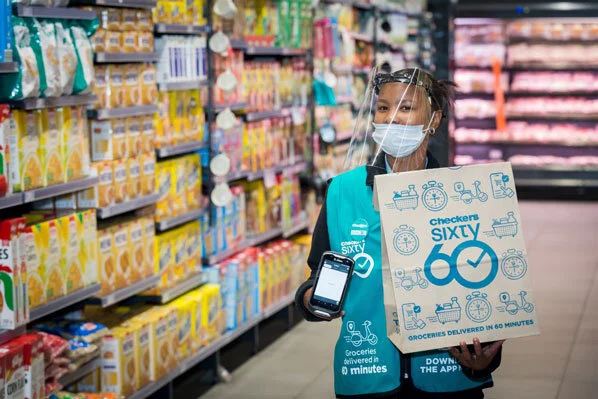
The South African initiative that stood out is the Shoprite Group and 99c collaboration that leveraged the launch of the Checkers 2019 customer loyalty programme Xtra Savings to launch Shoprite Xtra Savings, as well as the pilot online home delivery service, Sixty:60 – shop in 60 seconds with delivery guaranteed in 60 minutes.
Both marketer and agency found innovative ways to work together, from home, with tight deadlines. The results show what a streamlined, world-class partnership can do: Despite the poor economy and impact of Covid-19 on market share, new Checkers Xtra Savings customers benefitting by savings of over R972m collectively in only nine months (at end-June 2021) with sales growing by 6.4% year-on-year.
In studying The Show Must Go On, we see how advertising needs to adapt with agility to its environment and return on investment is greatest if it is relevant to and empathises with the consumer.
Importantly, the very best advertising is a result of a close marketer-agency collaboration and a willingness to turn the bow of boat and set sail for maximum success.
The IAS Masterclass with Cesar Vacchiano is set to take place on 21 April at 2pm. RSVP to radams@scopen.co.za

Why media agency pitches will lead the way in 2021
Listening to our agency and client colleagues in recent months as well as investigating through our own research via SCOPEN on the impact of Covid-19 and the trends in media spend, 2021 may be the year of the pitch.
As one of the leading pitch consulting companies with a rare view into marketing, media and agency trends, the IAS is predicting that 2021 will be a busy year for media pitches. There are a number of indicators for this assertion.
Firstly, media spend dropped across all media types during the toughest part of lockdown in 2020, with the exception of digital media which has proved highly resilient and had the edge with e-commerce boosting spend.
While spend recovered a little – notably during the latter part of 2020 – media owners are still enduring some dramatic changes and losses in spend which caused many changes and closures of several print publications early in 2020.
Another notable trend: Media owners are able to offer marketers extraordinarily attractive deals due to the amount of inventory they have available and are often going directly to clients instead of via the media agencies.
The behemoths of digital media owners Google and Facebook have been dealing directly with marketers since day one as well as with traditional media agencies, possibly more reluctantly with the latter. Add to this that the unstoppable Amazon – the world’s second-ever public company to be valued at US$1 trillion, after Apple – is likely to make its presence felt soon in South Africa, and impact will be felt.
SCOPEN research shows that media agencies globally have been consolidating in the past six months as they consider the impact of the downturn in spend and start to review what will be the likely forecasts in 2021.
Also, there’s the convergence of digital media creative agencies providing marketers with a very effective one-stop shop to meet the growing portion of their marketing and media spend, even if choices are limited.
Media agencies as go-to advisors
Amid this activity, marketers must continue to reach their consumers in the most effective channels and with optimum spend. This means media agencies will be in a stronger position to advise clients than they have been for a number of years.
For around 20 years, creative agencies in South Africa have been the first port of call for many marketers seeking to improve their results, with media agencies playing a support role. Change is already happening, though, as marketers realise that information about consumers is part of a media agency’s data-set in order to plan and execute media campaigns – and data is power.
Within the broadcast sector particularly, this knowledge is highly prized, being precisely gathered and able to provide real currency for media strategists and planners to deliver the most valuable results to marketers.
Media agencies note that their reviews are often led and managed by procurement heads at many of the corporate organisations, which means that there’s a focus on negotiation skills or best rates. However, the influence of what marketers need must not be overlooked, especially during these uncertain times.
The lengths budgets must go to…
Media budgets are often far larger than creative budgets, and yet those budgets have to go a long way in order to provide the results marketers seek.
AGENCY SCOPE studies of CMOs globally and locally show that while the ability to negotiate with media owners is important, what marketers really want from their media agency partners is innovative thinking, strategic skills and a robust understanding of the client’s business.
According to our own IAS data, there were probably in excess of 70 media-only pitches last year in 2020, involving vast amounts of media spend. Some of those pitches were reviews that happened as a result of contracts coming to an end and, in a number of cases, the incumbent media agencies were re-appointed.
This indicates that marketers and procurement heads do indeed benefit from regular media agency reviews, setting the tone for more pitches this year.
With data, analytics, analysis and innovation becoming more critical to the success of marketers today, I predict that the media agency pitch process will grow more complex and more important as marketers navigate their way through an unpredictable landscape to successfully reach their consumers and ultimately deliver results to brands that the C-Suite demands.
To read this article online click here

Evolution of our industry: Shortlist for projects
The start of last year brought the usual New Year predictions, all stymied by the pandemic, writes Johanna McDowell, CEO of the Independent Agency Search and Selection Company (IAS). Now, the blank slate that is 2021 is seeing innovators seeking opportunities and creating new solutions.
As a leading intermediary consultancy focusing on the optimal marketer-agency relationship, the IAS quickly notes and explores trends and workable new ideas that are beneficial to all parties.
While the relationship between marketers and their agencies is usually a long and fruitful one and this will not change, Covid-19 has generated many requests from marketers for IAS assistance in finding agencies to help with communications projects to supplement and give additional support to existing agency relationships.
Based on this demand and SCOPEN research that backs it up, the IAS delved into the value of small, agile agencies being able to step in when a marketer requires a specific skill set and ability within an exacting timeline.
Pre-qualified shortlisted agencies
The result is a “shortlist for projects”, where marketers are introduced to the agencies the IAS has determined are best suited to their immediate requirements. This obviates the need for the long exploration process that usually goes into finding the right fit and presents marketers with a small, pre-qualified choice.
Typically, the projects are in the areas of crisis comms, internal comms, social media management, PR and reputation management, digital requirements, and the like.
The IAS offering a list of five agencies in total, with experience in the relevant disciplines that marketers require, including the following:
· Detailed agency business credentials such as size of agency, location, BEE level, capabilities, case studies / examples of work
· Key contact person at each agency with all the necessary contact details
· Researched opinion on each agency from the IAS regarding competence and track record
Marketers will be able to select one or more agencies from the shortlist to interact and communicate with directly. The IAS will not manage a pitch process in this instance, but merely supply relevant credentials and contact details.
Because interesting times call for specialised assistance, this offering is proving to be a robust addition to the marketer’s arsenal, while generating cashflow among the smaller agencies that have the capacity to step up for brief, often once-off projects.
Time is money – and in this economy, you can take smart, novel creativity and rapid execution of projects to the bank.
To read this article on line click here

A marriage made in mediation – world class client: agency management
The two viewpoints couldn’t be further apart: An agency says, “You never lose a client on delivery, it’s always the relationship”; while their client says, “I really like them as people, but it’s all about delivery”. The fact that the two aren’t talking to each other when these things are said is clearly why client-agency relationships fail unnecessarily.
In 14 years of counselling clients and agencies around expectations in the advertising, marketing and communication process, the Independent Agency Search and Selection Company (IAS) has salvaged many a valuable client-agency relationship by having each actually hear what the other is actually saying and fostering a spirit of transparency and willingness to communicate between the two. Global research by our UK partners AAR show that lack of delivery is a clients’ key issue with their agency, whereas agencies often feel that they were not briefed correctly, or the brief was late and the client shows little understanding of times required to complete the task at hand.
Each perspective is valid: No agency can be expected to deliver on an incomplete brief and under unrealistic time constraints. On the other hand, if a client is launching a product or undertaking a sales drive, there are so many strings to pull together to ensure success that agencies often don’t realise. While the agency is trying to figure out the brief, the client is seeing sales or production opportunities slip by.
At this point, neither is going to truly “hear” the other, and carefully managed change is vital to keep an already fragile relationship on track. Clients must be encouraged to see how clarity on deadlines and detailed briefs can get a campaign started on the right foot. Their knee-jerk reactions to economic issues that affect their market also affect their agency and its delivery, which creates tension and leaves agencies thinking the client just doesn’t want to continue the relationship.
Plasters don’t work
Continually “putting a plaster” on irritations that arise in the relationship doesn’t heal the core issue, and ending the association is costly and often traumatic. So, what are the key solutions to nursing it back to health?
Briefly, it begins with talking openly in a mediated environment where both parties agree the relationship is worth saving. Then, both must be clear on what they understand about the other – requirements, deadlines, deliverables and expectations on delivery. Regular and constructive feedback sessions should be formally structured and implemented, and a 360° appraisal programme to support learning and progression for both parties should not be left until it’s too late. Both parties accepting responsibility for their part in any issues will also encourage more trust and understanding and leave the door open for honest discussions into the future.
In reviewing global issues between clients and agencies, it’s clear that a breakdown in communications often sees real business concerns end up in “he said, she said” spats and an irretrievable breakdown in communications. The question of “fix or fire” arises again and – like a marriage that just requires an adjustment of expectations – the IAS suggests always opting to fix before fire.
If you feel that your agency or client gives you “a poor response”, know that research shows they feel exactly the same way you do. Without mediated communication, your sense of “they don’t deliver” is met with “their demands are unrealistic”. A proactive response from both parties is required and we recommend ongoing evaluations to ensure reasonable expectations are being met by both parties.
To both clients and agencies we say, set yourself up for success. Get your team dynamic right, be purposeful, be communicative and – importantly – ensure you create a strategic space for both parties to come together and discuss issues that can see a long and mutually beneficial relationship thrive.
To read this article online click here

The value of chemistry between agency and client
The key to a long-term relationship between the advertising agency and client is long-lasting chemistry that works.
The key to a long-term relationship between the advertising agency and client is long-lasting chemistry that works.
Companies spend thousands to get their brand marketing right and in doing so rely on their advertising agency for its unique marketing flair. Perhaps the most important ingredient to a successful long-term relationship is good chemistry between client and agency.
Building sincere interpersonal and professional relationships is important to producing a successful campaign and enables the agency to deliver an effective marketing drive, that not only meets the client’s objectives but also stands out from the rest.
Chemistry between an advertising agency and the client is essential because it allows for a productive working relationship that encourages free thinking and a platform for both clients and agency to express ideas and opinions honestly and clearly.
Chemistry that works between an agency and client creates an energy that encourages both parties to think out of the box and produce innovative ideas and campaigns. More importantly it creates a climate of acceptance and trust.
Developing chemistry is not easy, but if an advertising agency understands the brand ethos of the client, producing a creative campaign that fits their vision can be achieved successfully.
Agencies must have their fingers on the pulse in terms of innovation and believe in their abilities in order to guide the client towards the design and implementation of a successful advertising campaign. It is also important for senior partners from the agency to be involved in the campaign in order for the client to feel assured that the entire agency is looking after their account.
Maintaining and nurturing the working relationship between the client and agency is not about long lunches, but one of respect, trust and confidentiality.
Understand the action plan
Frequent account mishandling could result in a breakdown in trust, and it is essential that the agency creates a stable environment. Tight briefs that clearly outline the strategy is vital for clients and agency to fully understand the action plan to avoid misunderstandings in the future. An important component to a good working relationship which is often neglected, is the complete transparency in the costing; and up to date and accurate invoicing and quoting at all times.
A breakdown in chemistry can be a consequence of the agency, who are naturally creative people, pitching a groundbreaking campaign the client does not accept and this often results in the agency becoming inhibited in the future.
Often clients want ‘award-winning’ advertising without really understanding what that means. While it is important for an agency to conceptualise an advertising campaign that works, it is equally important that an agency not force their ideas onto the client. Finding that balance is good chemistry.
Perhaps the most important element to chemistry is creative energy. Most often, the reputation of an agency is a result of that particular energy they possess. Embedding that energy within the DNA of an agency seems to be the common chemistry factor among the most successful agencies.
To read this article online click here

Finding the balance when managing a pitch process effectively
Now more than ever, due to the increasingly complex marketing ecosystem, marketers are seeing the use of intermediaries becoming more important in the daily scope of their operations and what they hope to achieve with their potential agencies during a pitch process.
Now more than ever, due to the increasingly complex marketing ecosystem, marketers are seeing the use of intermediaries becoming more important in the daily scope of their operations and what they hope to achieve with their potential agencies during a pitch process.
The scene for marketers all around, is that there is now an intrinsic need for results driven marketing solutions. Many key players in the industry now agree that using an intermediary can ensure a smoother and more efficiently managed pitch process.
However, the other side of the coin shows that marketers may find that using an intermediary can go against the grain of procurement by inviting an outsider to participate in such an internal affair.
When putting an advertising account or campaign out to pitch, the most important thing that needs to be addressed in the process is ensuring that the need to protect the brand/company’s reputation is applied effectively. Also, the marketer needs to have a clear understanding that all the costs are relevant and to achieve real value for money.
Many marketers are unaware that there is professional help out there – a neutral intermediary which has the skills to make life extremely easy for companies who commission them to run a search and selection process whether hiring a new long term agency partner or to fix a failing relationship, be it for creative, media, digital or any other discipline.
How intermediaries can bring the balance
An intermediary provides marketers with insight and makes it their business to research and understand the strengths of the agencies they put forward.
Intermediaries are valuable to marketers because they do most of the leg work. Having a process that is fair to all parties, results driven and robust, is a key ingredient for any marketer when engaging in outsourcing pitch consulting.
Furthermore, procurement should be involved in the intermediary decision from the start. However, procurement and marketing professionals may not always see eye to eye, and this can be an issue.
Experts whom I have had the pleasure of conversing with in the procurement space say that in order to get proven results, marketers should involve procurement staff when developing agency relationships.
What we all forget is that procurement professionals consider the three most important metrics to be cost reduction, risk mitigation and cost avoidance, while marketers see sales and market share increases, marketing ROI and brand health metrics as the best yardsticks for effective purchasing, this is why an intermediary is so useful – they unite these opposing forces in an amiable and balanced way.
The decision to outsource the pitch process should not be made lightly. Weighing the pros and cons, as well as considering factors other than cost savings, helps determine whether outsourcing is the right option.
Let the intermediary help you (the marketer and the procurement team) structure and formalise the agency relationship in areas such as KPIs, performance reviews, pricing and getting a robust contract in place.
To read this article online click here

IAS continues to grow its popular Agency Masterclass Programme
After more than 10 years of running a unique Agency Masteclass programme, the IAS continues to see growth with up to 70 attendees per class, particularly over the past year when the programme went virual. This easy-to-access solution over Covid attracted attendees from all over the country and as far afield as Nigeria, Kenya and Ghana.
After more than 10 years of running a unique Agency Masteclass programme, the IAS continues to see growth with up to 70 attendees per class, particularly over the past year when the programme went virual. This easy-to-access solution over Covid attracted attendees from all over the country and as far afield as Nigeria, Kenya and Ghana.
“The Masterclass Programme will offer a balance of local expertise to cater for our unique South African environment, and international insights which are more important than ever before due to the expenentially increasing pace at which international trends move around the world,” said Johanna McDowell, founder and CEO of the IAS.
The 2021 the Agency Masterclass Programme will offer 10 masterclasses over the year, an increase from previous years, with a focus on international speakers including:
Lisa Colantuono, AAR partner based in New York who will be tackling ‘The must have secrets of successful New Business Development’ based on her very popular published book “@AARLisa: New Biz in 140 Characters (or Less): Pitch Tips for Time-Starved Execs on the Run.
Cesar Vacchiano, global CEO and co-founder of SCOPEN sharing SCOPEN Global trends and insights including first insights from the South African AGENCY SCOPE study
Debbie Morrison, MD, global partnerships, Ebiquity PLC on Convergence of Creative and Media – an unavoidable trend?
The first Marketing Panel Masterclass is on the 17 February and will unpack An Unprecedented Time – What marketers are looking for?. The Marketing Panel will include some of the marketing industry top minds. For further details on the full range of topics to be covered during 2021 please click here.

A glimpse into 2021: Which will cost more – research or no research?
With an increased range of disciplines for marketers to take into account, knowing which research firms have the experience you need is vital for getting it right the first time.
With an increased range of disciplines for marketers to take into account, knowing which research firms have the experience you need is vital for getting it right the first time.
In the age of adaptive marketing that enables marketers to personalise not only their messaging but also the precise products and services to be delivered to potential customers, how do you decide what kind of research you need to do before determining the nature of a best-fit campaign?
It all comes down to what you need to know and what your business goals are. Obviously, engaging a research specialist is key – but which one has the experience specific to your client’s needs?
The IAS was recently contracted to work with a large organisation with a variety of research needs. An audit of all the research companies in South Africa, benchmarked against their international counterparts, was required to ensure the client was able to select from the top researchers, and invest in data that would pay dividends.
Areas of review
To ensure the client was delivered all the information required to choose the most effective research firm timeously and within budget, IAS research had to examine each contender’s overall experience, then that which was most important to our client.
This included the role of research for more advanced marketing purposes; how the research would be of value immediately and within the next few years; what the researchers would supply in terms of data that could be documented to show previous and potential trends; and an indication of pricing structures for deliverables.
Spending wisely
Having dug deep into the research industry in South Africa, along with insights into the international market, the IAS is now well positioned to offer recommendations on all aspects of research, and introduce the right companies for marketers needing the most valuable research per project.
In an economy that requires every cent to be spent wisely, marketers understand the importance of research – and the IAS understands the importance of getting the right partnership from the start.
As we move forward in a market that demands a new way of seeing things, we believe research will be a strong driver of overall marketing performance across campaigns of all types and sizes. The key to getting the most out of your research lies in the investment you make, not just financially but skilfully.
Trends for the new year may be difficult to predict from the platform on which we stand right now, but time and money spent on proper, in-depth research has never yet cost a marketer what no research has.
Click here to read to read the article online.

The 'blessings' of Covid continue into 2021
It might seem like a strange headline but the truth is that there have been many blessings that we believe will - and should - continue into 2021. Some seriously important changes have taken place in the world of brands and advertising and we expect to see these continue.
It might seem like a strange headline but the truth is that there have been many blessings that we believe will - and should - continue into 2021. Some seriously important changes have taken place in the world of brands and advertising and we expect to see these continue. Some of these include the following:
Brands demonstrating purpose (and the agencies supporting them)
Covid brought out the best in some brands that stepped up to the plate and ensured that they remained visible, relevant and purposeful. They also demonstrated real care and commitment. These are the brands that will be remembered for their support during some incredibly difficult moments. Some notable retail chains - whether food or pharmaceutical - continued to operate, continued to communicate and continued to reassure. Their agencies also stepped up to help them, supporting clients through very tough, uncertain circumstances. Those key relationships will never be forgotten.
Banks and insurance demonstrating commitment
Consumers and small businesses alike needed support to get through the initial shock of uncertainty. Their style of advertising took on a marked change in the early stages of Covid and there still remains a caring tone that I never really noticed before. Did financial institutions mean it and were they sincere? We believe they were from what we observed both locally and internationally through our work with AdForum where agencies have been presenting their work over the past nine months.
Agencies determined to stay open
With working from home becoming the norm - overnight - agency leaders took cuts in salary in order to keep their agency doors open and their staff intact. Agencies know that the upturn always comes, and although for a while we did not know what would happen next, we saw some real caring approaches to staff and a willingness to tolerate very unusual circumstances. Staff reacted positively and worked harder than ever to enable their agencies to succeed.
Pitches went on hold
For a short while marketers put pitching on hold - unless they absolutely had to - and this led to greater trust with their existing agencies that benefitted from the additional time that their clients were able to spend with them - even virtually. Pitch activity came back later in the year and there has been some 'pent-up demand' as a result of the delays in the early part of lockdown while we figured out how to pitch virtually.
Creativity
It was not just about a great brand ad, it was also about being able to produce in lockdown. Commercial shoots happened - all virtually. It is extraordinary what technology developments took place in such a short space of time. Over and above that there have been some extraordinary successes in creativity and tech in the past nine months, and these will continue into 2021.
Agency startups and the era of the independent
This was a global trend last year - some of it might have been economy-driven but much is the natural entrepreneurialism of most agencies wanting to make a real difference and realising that the pandemic could have been so much worse for all of us. There is no question that independent agencies are enjoying a renaissance period.
Agency holding companies (focus on staff)
What struck me in particular about the holding companies was their devotion to ensuring that as many of their staff as possible would maintain their jobs. And not only that - they demonstrated a clear commitment to their teams locally and globally and also ensured that they embraced the diversity challenges, which had always been a focus for some but were thrown into the forefront through Black Lives Matter.
Closer collaboration
There is no question that the industry came together - locally and globally - as we all paused our hitherto hectic lives of travel, in-person meetings, pitches and managing budgets. We learned the value of listening more and talking less, respecting others, valuing opinions, not just “chasing the dollar”. Some of us spent more time in our homes with our families than we had done for years and years. It is somehow a quieter world of work than it was at the beginning of 2020. I believe that this collaborative way of working and living will continue in an authentic way into 2021.

Mergers, acquisitions and deaths of agencies
The Covid-19 pandemic has accelerated a process of many changes in our industry.
The Covid-19 pandemic has accelerated a process of mergers in our industry.
WPP has, in recent times, championed the merging of various agencies. In 2018-2019 the trend started with mergers in PR, the most impactful of which was the Burson Marsteller and Cohn & Wolfe merger. Then Maxus disappeared being integrated into the other agencies within GroupM. Most impressive were the mergers between Wunderman and J. Walter Thompson, and with VML and Y&R, placing the name of the digital agencies in front of the legacy brands with more than a century of existence.
The most recent news in 2020 is the merger of AKQA and Grey. It is likely that this trend will lead to more century old brands in our industry disappearing. Ogilvy is reinforcing its position as a fully integrated network, after being the first to integrate the offerings from OgilvyOne and Ogilvy PR under one brand.
Within Publicis Groupe we notice how some other legacy agencies are becoming weaker (Leo Burnett) or even disappearing (Saatchi & Saatchi) in some countries. The most shocking was the closing of F/NAZCA Saatchi and Saatchi in Brazil, where it was one of the top five agencies in the country and one of the most awarded agencies in recent decades at Cannes Lions.
Within Dentsu, Vizeum is another brand that is likely to disappear. This loss will impact the industry less as it was not a strong agency in many countries. But it nonetheless reflects how even in the smaller of the holding groups, greater cost efficiencies are under the spotlight.
There are overall fewer changes in Interpublic and Omnicom. Within IPG, McCann is strongly reinforcing its positions outside the US, in Europe and Latam. In both regions it was recognised as the most effective network and in Europe it also received the Cannes Lions European network of the year. There are less changes within MullenLowe and FCB.
In Omnicom, Proximity was merged with RAPP and in some countries integrated within BBDO, disappearing as a network in itself. DDB and TBWA\ have also changed less and have reinforced positions.
The merging of creative and media agencies
Who knows the new mergers 2021 will bring? A trend I believe will reinforce the position of agencies, one unseen as yet, is the merging of creative and media agencies. I am surprised that this has not yet been undertaken by any of the holding groups. Although it will result in redundancies at a very senior level, managers and directors, with the combination of talent, data, tools, capabilities and experience working together to solve marketers needs, agencies will be unbeatable. They will have a competitive advantage that will be unequalled by neither consultancies nor digital platforms.
Most importantly I think that the key advantage of merging creative and media services, a return to the fully integrated agency, would be for the professionals working within these agencies. They will have the benefit of enhancing their capabilities by working with richer data exposure to top talent, cross-functional learning, which will make them far more marketable in this ever-changing industry.
The marketing ‘arms’ of consultancies will for sure continue to acquire agencies. In some selected countries Accenture Interactive has taken the lead and continues to build its network and to reinforce its offering where it has acquired talent. Deloitte Digital is doing the same. But there is still a lot to be done. The consultant groups have the connection with C-Suites, they dominate data and technology, they are good at producing content, but they still lag when it comes to producing great strategies, big ideas and powerful storytelling. They don’t produce campaigns that reach people’s hearts or change people’s behaviour.
And lastly, digital platforms (Facebook, Amazon, Google, Netflix...) have been acquiring talent trained in agencies for the last decade. They offer more and more creative solutions to marketers. I do think that they today, far more than consultancies, are the 'unknowns' of our industry. They not only compete against agencies, but also with retailers, film producers and distribution companies, music, book publishers, media, games, logistics, banks and payment methods… But life goes on and we need to continue living and working around them.

AdForum Global Summit Dec 2020 - Helping Clients Thrive During The Pandemic - Part 2
“How did you help your clients thrive during the pandemic and lockdown”was the theme of last year’s second virtual AdForum Worldwide Summit, 30 November–9 December 2020. Because of online conferencing, we were able to meet with agencies from Cape Town to Helsinki.
By Johanna McDowell. “How did you help your clients thrive during the pandemic and lockdown”was the theme of last year’s second virtual AdForum Worldwide Summit, 30 November–9 December 2020. Because of online conferencing, we were able to meet with agencies from Cape Town to Helsinki. Here’s the rest of my report.
Some key takeouts for us pitch consultants were:
• The era of the independent agency is just getting started and is growing exponentially
• The groups are marshalling their agency assets into solutions that will work for clients
• Platforms are the future
• Business results drive everything
• Creativity remains in top position at every stage in an agency evolution, no matter what the agency discipline may be.
Beacons of overwhelming optimism
Neverland is an independent agency of 20+ people and growing fast. Its objectives are to get an unfair share of talent, to be a “brand” as an agency, and to be beacons of overwhelming optimism. With these in mind the agency has set about securing clients, and has 10 good names already, including NBC, Jacobs, Heck Foods, Campari, Solgar, End Youth Loneliness, Kellys and Unilever. It also managed to produce a commercial, “Make this summer happy as Heck”— one of the first in the industry after lockdown in 2020 — for Heck Food. A very refreshing outlook at this highly active startup agency.
Gary Vaynerchuck started Vayner Media some 10 years ago. From very humble beginnings, it’s now an agency of 1000 people with offices in New York, London and Singapore, and is focused on digital media, creative, production and social media. It told us that, in competitive pitches, it comes up against every type of agency because of the variety of work that it does. Clients include Mondelēz, Lift, SKQ and Pepsi. Revenue in 2020 would have been US$170m.
It sees itself as the “agency of now”, responsive to consumers, and with a culture of kindness — especially within the agency. Its ideal brief would be a media and creative one that will drive business results. The agency sees itself as having an entrepreneurial approach, with kindness. It was an interesting session, although we only met Vaynerchuck, a very endearing character with his own humble beginnings in New Jersey.
LLYC is a PR and communications agency that’s moving into the integrated advertising space. Started in Madrid some 25 years ago, the agency is now very strong in Latin America, in the Spanish- and Portuguese-speaking world as well, as in Miami in the US. It positions itself as agency for story doing (not story telling); liquid modernity; technology and transmedia; and ethics. It has a total of 450 clients across its businesses — all very varied — and +600 consultants.
Case studies were shown for McDonalds — The Last Straw (environmental); Scania; BBVA — chocolate makers — a sense of cocoa to recover the sense of taste; and “Invisible loneliness”for the BBK (bank) Foundation.
“Designing a more human future”
Always a highlight at AdForum, R/GA is committed to “designing a more human future”. It noted that the second half of 2020 was much more active than the first half. It also told us that it believes that transformation no longer describes what’s happening and that we’re in an era of “post-transformation”, with 80% of consumers wanting brands to solve social problems. Its point of view is that “the future belongs to the brands and businesses that are harnessing tech for human needs.” And how are clients responding to this? CMOs now have the responsibility for brands/tech/humanity. Human brands — such as Nike and ESPN — are upping their tech; tech brands — such as Uber and Airbnb — are upping their humanity.
Where R/GA sees its role in this new world is as an agency that designs businesses and brands for a more human future and it believes that brands are becoming “an operating system”. With brands guiding much more than marketing, brands are involved in experience, business decisions and defining product development. Innovation happens at the intersection of these and this is where R/GA acts. It showed us examples via a case study for Nike and Google, where Nike Adapt BB shoes have the first in-game shopping experience powered entirely by voice. This “Hey Google — ask Nike”is also an example of brand as an operating system. Other case studies for Samsung and Verizon demonstrated the respective brand responses to lockdown.
R/GA sees 2021 as continuing at speed, with the agency looking for more and more opportunities to design a more human future.
It was a very concentrated session, with little time for questions, which was a pity as R/GA sessions normally have lots of questions from the consultants — but there’s been a change in leadership in that earlier last year, Barry Wacksman, chief growth officer, left to pursue a startup of his own. He’s certainly missed.
“Challenger” mentality
Uncommon (we met this extraordinary agency 12 months ago in person at AdForum in London) had another year of great successes. Now 65 people, it has a global presence and won AdAge’s 2020 International Small Agency of the Year. Its most recent work for ITV included assisting the brand to develop a “challenger” mentality and to produce campaigns for Mental Health in Britain — “Britain Get Talking” and a coronavirus response campaign. B&Q was another case study, which focused on the opportunities created through lockdown and people being at home, noticing the things at home that need fixing.
Next up was the highly successful VCCP, which took us through some remarkable work and treated us to a very enjoyable session. “Built for this time” is how it sees its agency, which challenges siloed thinking by saying that “it only works if it ALL works”. So, not just the ATL traditional advertising work but also less obvious BTL marketing communications. It cleverly structured its session of 90 minutes into discussion followed by ad breaks, where it showed its work from the previous 12 months.
It had a tough year, with turnover down by 13% and profits down by 20%. Nevertheless, it came through by focusing on client relationships, looking after its people, cost management and maintaining its ambitions and focus. So far, during lockdown, it’s won six new clients — all of those pitches happening virtually. It believes it’s more streamlined now and talked about the three challenges it took on:
• Rigidity of brands: some adapted; some didn’t. VCCP focused on adaptability, agility, UX and CX for brands such as O2 and Mondelēz Cadbury’ Heroes.
• Pessimism: it stayed optimistic and helped people “escape” through work for Meerkat Movies, Meerkat Meals and Meerkat Music. It convinced one of the world’s biggest bands, “Take That”, to reform and record from four different locations in lockdown.
• Wastage: what sort of period will it be when we rebound from this pandemic? The Roaring Twenties or the post-WW2 “rationing” years? VCCP believes it will be both, with revenge spending happening as well as a ration era of being more healthy, etc.
Its strategy is to be agile, cohesive and empathetic, with timing being central. VCCP sees a few reasons to be cheerful: location has become meaningless; global clients have expanded from five to 10 during this period; and its office in Singapore was voted 2020 Agency of the Year in Southeast Asia.
We were shown lots of wonderful work, including Christmas ads. Altogether, it was an exceptionally rewarding and stimulating session.
“Stay inside”
Publicis Groupe was another highly anticipated session, as we hadn’t had a chance to talk to the group for three years, thanks to restructuring and repositioning itself and its many companies. The charismatic Arthur Sadoun kicked off by explaining what its strategy had been as covid-19 hit: “Stay inside”. This theme meant don’t go outside of the group; stay home and work; don’t use freelancers; save on costs — and develop strategies to adapt — people, clients and business.
Its vision for 2021 is that we’re living in a world dominated by platforms eg Facebook, Google, Amazon etc. Publicis is built to help clients win in this platform world. The four imperatives are real identity; scaled, smart media; direct eco systems; and dynamic, diverse and disruptive creativity.
Its case study for Walgreens demonstrated how data, business transformation and creativity could create a “growth loop” on Amazon as an example. This growth loop, which was to be shown to the Publicis Groupe staff at its global conference the following week, is how Publicis will unlock growth in this platform world.
It allowed a lot of time for questions, which was great, as there were many from the consultants. We gained a better understanding of its own MARCEL platform, and it advised us that, as far as pitching is concerned, it has the following four viewpoints: it’s there to help the client transform; if clients want breakthrough work, then they should choose Publicis; it keeps its promises — especially with media; and the people in the room on a pitch will be the people in the future of that business in the agency.
A very confident session from this agency group — well worth the wait!
Client testimonial
Pablo (meaning humble) is another agency that we met in London in 2019; this agency is going from strength to strength since inception. In 2020, it was Campaign’s No. 1 New Business winner, a mighty achievement for the 75 people of Pablo. Teamwork is the hallmark of this agency, it seems, and no wonder — as it was founded by two partners who are former rugby players! This session as an interview conducted by AdForum’s Peter Cowie.
How did it get to no 1 in new biz? Great training and the ability to adapt quickly.
What is it proud of? Teamwork. It didn’t lose sight of objectives and it reinvested in the agency. It grew its creative department at a time when many others were shedding people, and it changed the shape of its agency by building its internal capabilities.
What did this enable? A more proactive approach to clients and prospects meant more opportunities to win more work and more new business. It decided it couldn’t demonstrate agency culture as it couldn’t invite clients to its offices. So, it gave up the offices and paid that rent to “Shelter”, a charity for the homeless — staying true to its agency culture. It was also first to market with several initiatives.
What is the one thing that achieved this remarkable new business success? A deep team, highly skilled.
A client testimonial from David Wheldon, Royal Bank of Scotland CMO, was an interesting feature of this session and he shared some of his experience of working with Pablo. One of the agency’s initiatives was a CMO-sharing session series, so that CMOs could “share the pain” of their brands and experiences during lockdown; it’s something that will never be forgotten by the people who participated, according to Wheldon.
“Truth to meaning powered by integrated intelligence”
McCann Worldgroup Europe plays a lead role in 10 out of 12 of the main clients in the IPG Group. It positions itself as helping brands to earn an meaningful role in people’s lives. “Truth to meaning powered by integrated intelligence” is its approach and operating system. It demonstrated this to us in a series of case studies from Microsoft and Hollaback (a street harassment awareness initiative) to L’Oréal —we learnt that, in 2021, the “I’m worth it” positioning will be 50 years old —a cause for multiple celebrations during this year, we’re sure.
IPG offered us a chance to look at how it’s streamlining its business, after what we saw at the June 2020 summit. It’s developed a grouping of its PR, sponsorship, sports and entertainment, social, digital and reputation management agencies — DXTRA — which launched at the end of October 2020, and the idea behind this is to provide clients with one point of contact for all of these services and agencies, with the intention of connecting around consumer needs. There are 28 best-in-class agencies, such as Weber Shandwick, Golin and Octagon, and 7000 people globally in 24 countries. We saw a reel of the various work that’s been done within DXTRA in order to demonstrate the offering.
A big development in the IPG group — one to watch.
Click here to read the article online

AGENCY SCOPE 2021: Trends on the path to new world agility
As preparations get underway for the 4th AGENCY SCOPE study to begin in May 2021, Johanna McDowell, SCOPEN partner and director for the UK and South Africa, notes that some of the trends seen in the global research will be a barometer for the pressures, proficiencies and pandemic recovery in South Africa.
As preparations get underway for the 4th AGENCY SCOPE study to begin in May 2021, Johanna McDowell, SCOPEN partner and director for the UK and South Africa, notes that some of the trends seen in the global research will be a barometer for the pressures, proficiencies and pandemic recovery in South Africa.
Off the back of our plunge into rapid, monumental change, marketers will be tasked with facing a number of complex issues in 2021 and beyond. SCOPEN co-founder and global CEO, César Vacchiano’s research in overseas markets shows that the amounts of work during Covid-19 lockdowns grew, at fees that remained static.
The pace at which strategic changes had to be made and implemented through Covid spilled over to agencies and work picked up as marketer’s demand grew giving rise to a remarkable trend: Where agencies used to pitch two or three ideas to marketers, the time constraints forced them to pick one to present.
César believes this will become the norm and agencies will back their best work, forcing marketers to choose from fewer – but more considered – ideas.
Then, there’s the growing complexity of the communications world, which has led to new models of in-housing of agencies. However, talent available to bring to in-house operations is not always ideal. They are often quickly bored due to the lack of brand and task diversity, and isolated from the typical agency creative hot house, making them difficult to retain.
Carrying the costs of in-house creative salaries on a permanent basis is quite a cost burden, and marketers would do better to hire an agency or work alongside a hybrid model, where teams ideally work between the client and the agency.
The creative-media merge
The industry’s next move, however – creatives merging with media agencies – is a trend to note. An amalgamation of this nature will bring together a full-service, one-stop shop able to provide more transformational solutions for marketing and technology clients. With digital in the mix, the move is one that provides brands with the adaptive marketing many are seeking.
Thus, AGENCY SCOPE 2021/2022 will be trying to facilitate a deeper conversation around marketers’ digital partners such as Google, Facebook, LinkedIn and Instagram. As social media platforms foster more intimate relationships with people, they meet the needs of marketers looking for those once-elusive interpersonal relationships.
So, are all online platforms ultimately the responsibility of the marketer or the digital agency? What about PR? Surely blogs, vlogs and Facebook community monitoring is public relations?
The agency that goes as “digital” must certainly take ownership of the strategy that combines all online advertising, but why would they incur the expense of, say, writers, when those fall under PR. Who does the social media team on the front line of engaging communities and taking responsibility for brand reputation work with or report to?
To deliver an effective, multi-channel customer experience, there must be deeper understanding as to who owns each relationship and how they dovetail in their respective understanding of their part in a campaign, and the analytics gleaned from it.
I believe that collaboration between several teams is possible and even profitable, providing there’s a single point of management – and the marketer is a front-runner for that position.
Start-ups: Small fish or a good catch?
Another trend we saw as Covid began to take hold was the rapid flourishing of start up agencies. With job losses across the board, many talented individuals brought their services together and have created something of a cultural phenomenon in the industry which is, by all accounts, keeping bigger agencies on their toes.
Jason Hall, digital marketer with US publication FiveChannels, says that even in a pitch, a small agency has a distinct advantage: “Your team won’t be distracted by the demands of Coca-Cola next week, or Goldman Sachs the week after. You’ll be focusing on the client you’re pitching to, with very little in the way to knock you off the tracks.”
We are keen to see how these start-ups continue to challenge the status quo and push boundaries as they impact relationships with agencies – and the number of agencies – that clients are working with. Marketers may well enjoy the undivided attention and element of dedication a small, hungry agency offers.
With a number of service permutations for marketers to choose from, César notes that AGENCY SCOPE data enables agencies to position themselves and their offerings for high visibility.
As the preeminent tool to highlight an agency’s mettle and assist marketers in identifying a good fit, AGENCY SCOPE 2021 will continue to give subscribers a global view of what clients look for and a local view of the market.
Noted by Luca Gallarelli of TBWA\South Africa for its “outstanding depth of analysis”, we look forward to exceptional data from a particularly interesting industry right now.

The Art of Virtual Pitching by Johanna McDowell
Virtual pitching allowed the pitch process to continue through Covid-19. Is it here to stay? And is it the best option for agencies and clients? Johanna McDowell shares her thoughts.

With Covid-19 having thrown normal pitch processes into disarray, how have the advertising and marketing industries managed? Virtually, of course!
While virtual pitches were not unknown before the pandemic, they were certainly not as common or frequent as they are now.
The advertising, media and marketing sectors are slowly returning to the office, and a vague sense of normality along with this, but it is clear many will still work from home. Equally clear is that travelling for pitching is just not going to happen for quite some time. In fact, in the UK, Campaign magazine reported that more than half of “adlanders” were “completely avoiding the office” after surveying 2 000 of its registered users.
From a personal perspective, Independent Agency Selection (IAS) completed a few pitches during lockdown with clients whom we only met physically after the pitch. And we have pitches that started before lockdown that were postponed, plus we have one that started in March and is still being completed.
Pitch activity has increased recently and most of it is still virtual, although our next chemistry sessions will be face to face, as will the upcoming final pitches.
The upside
Of course there are pros and cons to virtual pitching, as there are to working from home. It is time efficient with no travel necessary whether locally or city to city.
Additional meetings and Q&A sessions can be easily slotted into a pitch process, making the whole sequence more effective. Access to senior client staff is also much easier as travelling schedules have been vastly reduced at C-suite level and everyone is just more available. This means that the decision makers can be in the pitch.
Although it is less easy to read the room – a very important part of gauging client reaction during a pitch – it is possible to pick up certain nuances that can help cue questions or explanations. Technology enables a greater number of stakeholders to be included, which is very useful, as is the fact that sessions can be recorded and listened to later should clarification be required.
Locations are neutral, delivering equality for both client and agency teams irrespective of home office location. Judgement is more accurate, as there is less chance of the “theatre” of pitching obscuring the content of the pitch.
The downside
On the con side of the coin, one of the things we have noticed is that while clients are working remotely, they are constantly in touch with each other on WhatsApp. This happens throughout a pitch presentation – which of course the agency cannot see. So a great deal of communication is happening among the clients in response to the agency pitch, which the client is not sharing. This leads to ‘group speak’ instead of clients evaluating independently and only discussing after the pitch.
In addition, if the clients are working remotely and are not together in the same room for the presentation, then the agency should probably do the same thing. It is quite a contrast to hear an agency team all presenting together in the same place but virtually to the clients who are all dispersed. The rapport and repartee between the agency folk – which would be quite normal in a face-to-face pitch with client present – can be quite off-putting and excluding when the client is virtual.
Another con is that chemistry more difficult to gauge, as eye contact is harder and it can be difficult for client to detect agency team chemistry dynamics – and therefore to read them. Being unable to read the room is a drawback, as 7% of our ability to persuade comes from words, 38% from tone of voice and 55% from ‘paraverbals’, so more than half of these non-verbal cues are lost if you are not in the same room.
Something else creeping in to our processes is ‘Teams fatigue’. With so much business being conducted over Zoom or Teams these days, a pitch might be regarded by the client team as “just another meeting”, so concentration levels might not be what they need to be.
Stick to the basics
To be comfortable pitching virtually, it’s important to follow the same rules that you normally would as an agency. Make sure you rehearse fully and particularly that the technology does not trip you up. If you have large files or commercials to screen, send them separately ahead of the pitch for client to open at the appropriate time. And try limit the theatre, as this can be very distracting when it is virtual.
Stick to your times: just because it is virtual does not mean you have more time. Clients have extraordinary time pressures at the moment, with many of them working with reduced teams.
Negotiation meetings post-pitch are very important, and what’s really good now is that there is more time for discussion, which can all be done over Teams as opposed to email. Financial/commercial discussions can often go awry but in this virtual world they seem to be easier and less stressful for all concerned.
We think that in future, pitches will be a combination of virtual and physical, depending on the location of the client and agency team. With this greater flexibility comes more opportunity, which we believe will also extend into other countries in Africa.
Click here to read the article online

AdForum Global Summit Dec 2020 - Helping Clients Thrive During The Pandemic - Part 1
How did you help your clients thrive during the pandemic and lockdown” is essentially the theme of this latest AdForum Worldwide Summit, 30 November–9 December 2020. Because it’s been virtual, we’ve been able to meet with agencies from Cape Town to Helsinki and from New York to Madrid while still not moving from our offices or our kitchens
by Johanna McDowell. “How did you help your clients thrive during the pandemic and lockdown” is essentially the theme of this latest AdForum Worldwide Summit, 30 November–9 December 2020. Because it’s been virtual, we’ve been able to meet with agencies from Cape Town to Helsinki and from New York to Madrid while still not moving from our offices or our kitchens.
It’s remarkable to think how much more we’ve been able to connect at AdForum because of the accelerated use of technology — and we’ve met agencies that we otherwise might not have had a chance to encounter. Apart from the agency presentations, we’ve also had daily catchup sessions with the consultants only. This serves to reinforce the longstanding relationships that we’ve built across the world over the last 13 years that I’ve personally been attending these summits.
Embracing the theme, the agencies have generally shown us a lot of work that they’ve been producing during the past nine months. They’ve also been able to share results; it’s no longer just about the empathy needed for brands to cope during the pandemic but it’s much more about the recovery, the rebuilding and the way in which we can come out of the global recession that covid-19 has created.
Accelerated
Several of the independent, localised agencies are actually producing global work for global brands; there’s no question that this has been accelerated by the coronavirus.
For example, &Rosas in Madrid showed us work for Boots/Walgreens, SEAT, Bacardi and Pepsico. This agency prides itself on being independent, with 75 staff members, and being one of the top five agencies in Spain and top three independents. It’s never lost a client in 16 years of being in business through poor service or lack of creativity and delivery. Case studies from sports brand, Decathlon, and alcohol brand, American Gin, were shown to us. Regarded as the “Wieden & Kennedy” of Spain, it completed its session with some work for automotive brand, Cupra.
We also heard from the top global team at Wunderman Thompson, which focused on “inspiration” as its theme. During the lockdown period, it’s been able to create a series of tools, both for creative and measurement purposes, on a platform that’s shared among its 20 000 staff worldwide. This has enabled staff to remain connected throughout this period and to be able to continue their focus on creative work based in data.
We saw case studies for British Telecom regarding soccer; Red Cross; Avon Brasil’s This is My Colour, relating to cosmetics produced purposefully for black women; Burger King Italia’s Social Distancing Whopper, using extra onions and breath as a social distancing method; and Kit Kat Amsterdam taking a break from its “Have a break”.
Wunderman Thompson has won 450 new business pitches this year globally — very, very impressive during such a period as this. It’s also focused on its Unilever relationship and how this worked during covid-19. “For Unilever to win in business [it] must win in ecommerce” is the belief that’s been followed this year in particular and we were shown work that demonstrated the various brand commitments to purpose at the speed of culture for Vaseline, and for human and authentic connection for Lux.
Independent agencies
We saw five independent agencies, all belonging to the Network One group of 1 200 agencies worldwide. This association of independent agencies has been built over a 16‑year period; 50% of the agencies are creatively led, 20% media and the balance in PR.
Over these five ‘speed-dating’ sessions, we met with King James Group Africa, which got us off to an impressive start with its wonderful agency reel showing clips and highlights of its very best work with commentary from agency founders, James Barty and Alistair King. This was the first time a South African agency has featured at the AdForum Summit and the feedback from my consultant colleagues was very favourable indeed. Flying the flag for South Africa, let’s hope we see more SA agencies participating in future summits — our creativity and quality of work are world-class.
Kurio, based in Helsinki, is a social media specialist agency but its winning recipe, which has garnered it many Cannes Lions wins, is based on something happening (action), as well as something being said. It works globally and its case study for Microsoft’s Surface the Woman as IT influencers was a good demonstration of its capability.
Zulu Alpha Kilo is based in Toronto and showed us some extraordinary and brilliant work for Cineplex. It’s also initiated an industry ad, Say No to Spec, extolling the dangers of agencies falling into the trap of providing work for no charge to prospective clients. The creative leader and founder, Zak Mroueh (hence the agency name/initials), was formerly at TAXI, a very well-known and highly creative agency in Canada which we’d met previously at AdForum in Copenhagen several years ago.
Despite the name of this agency, London Advertising, 92% of the work it does is for overseas clients with global and international briefs. Some excellent new business wins during lockdown, many of which happened as a result of the agency campaign it ran to support the “keep advertising when there is a downturn” which agencies advocate to clients. This time, however, the agency put its money where its mouth was and ran the campaign for itself. It worked.
Humanise is a collective of eight agencies under one roof: all independent but with a single culture. With offices in Toronto and Montreal, this agency philosophy is “human-first creative”, making them very relevant for this particular time we’re living through. It was the final Network One group presentation we viewed.
Herezie is a 100% independent agency based in Paris, with 80 employees, and we saw the work that it did during lockdown as setting a context for some of the brands it works with, such as FREE (second-largest French mobile network), for which it ran a campaign all over France. Les Voisins (“the neighbours”) featured relatable amusing and typical covid-19 instances. In addition, one of its clients is Amazon Prime. It launched a number of commercials for the various shows that were starting, such as Jack Ryan: Season 2, where it also included Amazon Binge Shopping through very clever tech that enabled viewers to spot things they wanted to buy in the Jack Ryan movie, and then actually click on them and purchase in real time. Extraordinary tech and creativity.
Some other excellent case studies were shared for Superwear, Unicef and Vileda, all produced during covid-19 and using the more amusing aspects of the situation we’ve all found ourselves in over this period. Some really brilliant work.
By The Network, a new agency network, was started nine months ago alongside covid-19!! Launched and owned by creative leaders and founders of their own agencies, including Herezie for example, this network is designed to completely disrupt the network model which is now felt to be too “corporate”. By The Network is now a network of 450 creatives of 40 nationalities in 17 agencies in 21 markets. It’s happy to work on a project basis, and will work locally or globally. It’s proud of the fact that it has no “layers of people” but is rather a carefully curated and exclusive group of highly creative independent agencies. It has a customised and unique IT platform so that members may all communicate and share work.
I have a list of the agencies that are part of this — they’re all over the world, independent and with different disciplines. And, yes, an agency from SA is going to be invited to join the network. Watch this space.
RAPP, Proximity merger
The Omnicom Precision Marketing Group (OPMG) presentation was powered by RAPP and Proximity. We looked ‘Through the Keyhole’ for this presentation, which focused on work that stood out as a beacon of positivity during lockdown. More and more clients are needing to make their first-party data work harder along with creativity and, during the pandemic, RAPP (well-known for data and direct marketing) and Proximity (tech) merged to create this group that will transform businesses. Once again, it’s all about data and creativity. We’ve seen this model operating very effectively in SA already in the area of digital creative AND media.
Wendy Clark, former DDB Worldwide CEO, joined dentsu some 99 days ago . She’s an extraordinary leader and has already powered her way into the dentsu network, creating change every day. It tracks its internal successes as well as external — continuously. She was happy to report that it’s recorded the highest level of employee engagement within dentsu for three years. Client referrals are at their highest for two years, too. An impressive start to a great session.
Click here to read the article online.

The Building Blocks of Right-Housing for Growth and Success
In this age of adaptive marketing, when delivering the right message at the right time on the right platform is key, right-housing is vital to the success of leading customers through the sales funnel. So how do you start ... and get it right?
In this age of adaptive marketing, when delivering the right message at the right time on the right platform is key, right-housing is vital to the success of leading customers through the sales funnel. So how do you start ... and get it right?
Right-housing requires that marketers review not only their internal and external capabilities, but also those of the agencies they are working with. Getting this right requires an investment in creating a working model that is dynamic and can be built and rebuilt to suit a market that demands flexibility.
Right-housing means improving performance over time, and learning quickly what works and what doesn’t. Having the right analytics to determine this will generate robust – and cost effective – decision-making.
For a solid foundation, marketers must identify their core strengths and weaknesses, examine their company culture, make changes where required and determine their key goal and what needs to be done to attain it.
There’s much to be learnt by noting what other organisations are doing to blend internal and external capabilities across the layers of the marketing ecosystem, including which they tackled first and why.
Michael Storey, head of creative and branding at Ocado in London, is quoted as saying: “An impartial resource to help with designing and resourcing our marketing structure would be a super helpful plug-in.”
Impartiality in design is important because of the complexity of right-housing - if some agencies in your blueprint aren’t effective, you stand to lose financially and reputationally.
Capabilities: balancing internal and external
According to the paper “Right-Housing for the 2020s” by marketing consultancy AAR Group, “To find the right blend of internal and external capabilities, you first need to break down the Jobs To Be Done across every layer of your marketing ecosystem; including how you Think, Create, Trade/Buy, Adapt, Distribute and Measure.”
Some marketers may prefer in-house solutions with marginal outsourcing, but creating a strategy with the end goal in mind may require a transformation in thinking and different building blocks for success.
Influencing the entire consumer experience requires communications, creative capital, agility and the ability to put data into action. Right-housing these functions means briefing the lead, PR, digital, below-the-line, above-the-line and all other agencies, to ensure their specific disciplines add value and do not overlap with other providers.
External agencies will have to pass the marketer’s litmus test, which should include determining their precise specialities and ability to help your business connect better with current and future customers, their willingness to understand and participate in your growth agenda; and their ability to add innovative solutions to your business.
Adaptive layers for new-era marketing
You’ll note that as you drill down through each layer in the ecosystem, more questions appear and your right-housing architecture shifts. The process requires strong, hands-on management and the ability to create a model that may need several rebuilds when new information appears. Adaptive marketing is here to stay, and your systems and teams should facilitate it.
Therefore, throughout the process, it’s vital to remember your creative capital. Each of the building blocks of right-housing consists of people who will make sure their block fits in with all the others – or not.
Today’s marketing ecosystem must be adjustable and resilient, shifting at the pace set by the combined layers of traditional and online business. Some shifts may be more radical than others, but the house that is still standing after the current challenges of Covid-19 and a depressed economy is also likely to withstand most stumbling blocks.
*Johanna McDowell is the CEO of the Independent Agency Search and Selection Company (IAS). This is the second article in a series on right-housing. The first article can be found here.
Click here to view this article online

AGENCY SCOPE 2020/21: Marketing in an unprecedented time
The fourth edition of AGENCY SCOPE 2020/21 commences fieldwork in early 2021 and Johanna McDowell, SCOPEN Partner and Director for the UK and South Africa, notes that in this unprecedented time, information that enables agencies to see their positioning in the market through marketers eyes is invaluable.
As we feel our way around the challenges the Covid-19 pandemic has created, the information to be gleaned from virtual face-to-face in depth interviews with an anticipated 450 participants - including 280 senior marketers and Chief Marketing Officers (CMOs) - will see the 4th AGENCY SCOPE take its place as the preeminent tool for agencies to determine where they stand in the “new normal”.
AGENCY SCOPE is a biennial study conducted by international research consultancy SCOPEN, and the focus for 2021 looks certain to highlight not just the shock and gloom of Covid, but the positives the marketing industry actively created in 2020.
SCOPEN co-founder and global CEO, César Vacchiano, says he has been pleasantly surprised to note that from his interactions across the world, most of the independent agencies have dealt well with the financial impact of Covid-19.
Many marketers, he points out, realised early in the pandemic that investing in data analytics and technology to maintain brand purpose was key to survival. Without being able to take advantage of the sudden leap to digital campaigns, many more marketing firms may not have made it this far.
With every study, I have been amazed at the insight into industry players that marketing leaders are willing to share. As Grey Advertising’s Paul Jackson put it: “South Africa’s AGENCY SCOPE is a vital health-check of our agency and our industry, as seen by marketers, providing insight into how we are tracking against our peers and identifying trends in relation to other global markets.”
Jackson mirrored the sentiment of other agency leaders by noting that these insights provide “the important focus necessary to support the implementation of our agency's strategic plans”.
The age of adaptive marketing
SCOPEN’s experience shows that subscribers to AGENCY SCOPE often refer back to the insights they received about their agency which, in this age of adaptive marketing, can be a game changer.
The rigorous interview process and topics discussed with leaders in the marketing sector provides a depth of analysis from which action can be taken. From actual client satisfaction to comparing integrated services offerings between agencies, this study of the creative and media agency landscape in South Africa often provides agencies with a “perception versus reality” moment to change or refocus their efforts.
In the words of James Moffat, CEO of Promise, the data on agency image overview, performance and market perception “brings the awareness of reality versus how we see ourselves”, enabling a fresh look at their business.
With his knowledge of the industry across the continents, César believes the global snapshot in 2021 is likely to show the growth of independent agencies, as well technical capabilities being combined with brand purpose.
However, we both agree that there is a definite skills and knowledge gap that marketers will have to tackle in a world somewhat more complex post-Covid-19, with an emerging trend being mergers in the multinational agency space, as well as the amalgamation of creative and media agencies.
We believe that the AGENCY SCOPE analysis of the 2021 fieldwork will bring an overview of experience gleaned by CMOs that starts with the sudden impact of the early 2020 global lockdowns and leads to the resources and agility they employed to adapt when faced with no other choice.
This, I believe, will definitely be one for the books.